Toronto to Niagara Falls: every way to get there, compared
What's the best way to get from Toronto to Niagara Falls?
Driving the QEW takes about 1 hour 30 minutes and gives you the most flexibility. GO Transit's year-round bus or VIA Rail plus a short local connection is usually the cheapest option for one or two people. An organized day tour trades a longer bus ride for zero planning, at a noticeably higher price and less time at the falls.
Five ways to make the trip
Niagara Falls sits about 130 kilometres southwest of Toronto, and there are really five practical ways to close that distance: driving yourself, GO Transit, VIA Rail, a long-distance bus, or an organized day tour that handles the driving for you. None of them is wrong, and none of them is free of trade-offs.
This page compares what each one actually costs, how long it actually takes once you count the parts nobody advertises, and who each option genuinely suits. If you’re flying into Toronto Pearson specifically, the airport-to-falls logistics get their own page — see Toronto Pearson to Niagara Falls. If your plan already includes Niagara-on-the-Lake and the wine route, that combination has its own detailed guide too, linked further down.
By car via the QEW
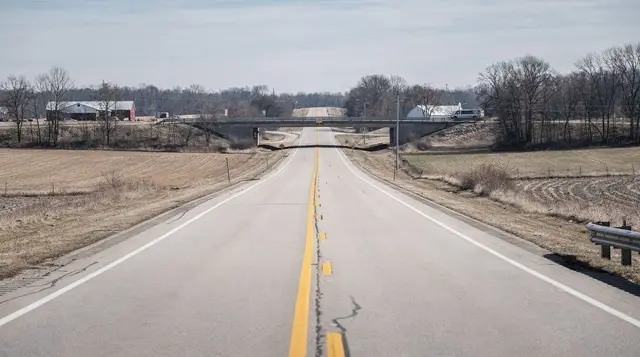
Driving is the most direct option and the one most Toronto-area visitors default to. The route runs the Queen Elizabeth Way (QEW) the entire way, with no toll road involved — this isn’t the 407. Under normal conditions the drive takes about 1 hour 30 minutes for the 130 kilometres, but “normal conditions” is doing some work in that sentence. The QEW through Mississauga, Oakville, Burlington, and Hamilton carries heavy commuter traffic on weekday afternoons, and on summer Sundays it turns into a slow crawl in the eastbound direction as day visitors head back to Toronto in the same two- or three-hour window. Add 30 to 60 minutes on a Friday evening departure or a Sunday evening return in July or August.
Parking once you arrive is the part that catches people out. The Canadian side runs municipal and private lots near Table Rock and Clifton Hill that fill early on summer days and typically run $20 to $30 CAD for the day, more on peak weekends and during events like the Winter Festival of Lights. There’s no getting around this cost if you drive — see parking on the Canadian side for where the better value lots actually are, because the first lot you see from the road is rarely the cheapest.
Driving wins on flexibility: you can leave when you want, stop in Niagara-on-the-Lake or a winery on the way back, and carry your own gear without hauling it through a bus terminal. It’s the strongest option for families and small groups, since the cost of gas and parking splits across everyone in the car rather than multiplying per person the way transit fares do.
GO Transit: train and bus
GO Transit runs two very different services to Niagara Falls, and mixing them up is the single most common planning mistake on this route. The GO bus runs year-round, with multiple daily departures from Toronto’s Union Station and connecting GO terminals, and it’s the backbone of a car-free trip in any season.
The GO train to Niagara Falls, by contrast, is seasonal and weekend-only — it typically operates only through the warmer months on Saturdays and Sundays, and it simply doesn’t exist as an option the rest of the week or the rest of the year. Don’t build a January or a Tuesday trip around a GO train departure; check the current GO Transit schedule before you commit, because the seasonal window shifts slightly year to year.
Travel time on the bus runs close to two hours depending on the route and stops, longer than driving but with no parking to find and no traffic to sit in yourself. Fares are a fraction of what a tour costs and considerably less than fuel plus parking for a solo traveller. Once in Niagara Falls, the GO terminal connects reasonably well to WEGO, the local tourist bus network — see getting around with WEGO and the Incline Railway for how the pieces link up on the ground.
VIA Rail
VIA Rail also serves Niagara Falls from Toronto, on a route that continues on to Buffalo via the Amtrak Maple Leaf service (useful to know if you’re eventually crossing the border, though that’s its own topic — see crossing the border at Niagara). VIA is comfortable, runs to a fixed timetable, and the Niagara Falls station sits a manageable distance from the main tourist area, walkable in decent weather or a short taxi otherwise.
It isn’t the cheapest way to get there — fares run higher than the GO bus for the same distance — and it isn’t especially frequent, with typically one or two departures a day rather than an hourly service. It suits travellers who want a fixed, bookable seat and don’t mind paying a premium for it, or who are already using VIA elsewhere on a longer Canadian itinerary.
Long-distance bus
Commercial long-distance operators such as Megabus and FlixBus also run this corridor, usually departing from Union Station or nearby stops in downtown Toronto. Fares can undercut GO Transit on advance-purchase tickets, though pricing swings with demand the way most intercity bus pricing does — a ticket booked a month out and one booked the morning of can differ by a large margin. Travel time is broadly similar to the GO bus, around two hours, and drop-off points are usually close enough to walk from. The trade-off is schedule frequency: these operators run fewer daily departures than GO Transit, so the trip needs more advance planning around specific times rather than showing up and catching the next one.
The organized day tour
The fifth option is a guided day tour that picks travellers up in Toronto or a nearby suburb, drives them to Niagara Falls, includes some mix of a boat cruise or wine tasting, and drives them back the same evening. This is the most convenient option in the sense that someone else plans, drives, and often books your attraction tickets for you. It’s also, honestly, the most expensive per person, and it deserves the least rounded-up praise, because the math behind a day tour is worth doing before booking one.
A realistic day tour runs 10 to 12 hours door to door, and a meaningful share of that time is spent on the bus rather than at the falls. Because the bus makes pickup stops across the Greater Toronto Area before ever reaching the QEW, and because return trips fight the same Sunday-evening traffic a solo driver would, the bus portion alone frequently adds up to about 3 hours each way — roughly double the point-to-point driving time.
That leaves something in the range of 4 to 5 hours actually at the falls, and less again if the tour includes a winery stop, a shopping detour, or a group lunch along the way. A traveller who drives or takes transit independently and structures their own day can easily spend 6, 8, or more hours at the falls for the same calendar day.
For a Toronto-based, boat-inclusive option, a full-day tour from Toronto that bundles falls sightseeing with a boat cruise is one of the more complete versions of this format, and travellers who’d rather skip the shared group schedule can look at a private tour from Toronto that includes its own boat cruise instead.
Travellers based in the western GTA suburbs rather than downtown Toronto have pickup-specific options too: a Mississauga pickup tour that pairs the falls with a boat ride and lunch, or a private tour with pickup from Oakville for groups of up to four, which cuts out the downtown-Toronto pickup loop and shortens the bus portion a little.
None of this makes a tour a bad choice — for a solo traveller without a car, someone visiting on a tight one-day layover, or anyone who simply doesn’t want to plan transit connections and attraction tickets themselves, the convenience is real and worth paying for. The point is narrower: a tour is not automatically the best value, and it should be booked because the convenience is worth it to you, not because it looks like the default option.
Cost and time compared
Prices are in CAD and are rough per-person ranges for 2026 — always check current fares before booking, since transit pricing and tour pricing both move with the season and with demand.
| Option | One-way travel time | Approx. cost (per person, CAD) | Best for |
|---|---|---|---|
| Drive (QEW) | ~1h30 (more at peak times) | Gas + $20-30 parking, split by car | Families, groups with a car, flexible schedules |
| GO Transit bus | ~2 hours | $15-25 one-way | Year-round, budget-conscious, no car |
| GO Transit train | ~1h45 (seasonal, weekends only) | $15-25 one-way | Weekend trips in warmer months only |
| VIA Rail | ~2 hours | $30-60 one-way | Fixed timetable, some comfort premium |
| Long-distance bus | ~2 hours | $15-35 one-way (varies with demand) | Advance bookers, budget travellers |
| Organized day tour | ~3 hours each way (bus) | $100-180+, often includes a boat cruise | No planning, no car, time-limited visitors |
The pattern that matters most: transit options land at roughly the same travel time as each other, all noticeably faster than a tour’s bus portion, at a fraction of the tour’s cost. The tour’s price premium is buying convenience and a bundled itinerary, not speed.
Which one should you pick?
- Have a car and are travelling with family or a group of three or more? Drive. The QEW is the fastest option and the per-person cost drops as the car fills up. Just don’t leave Toronto on a Friday afternoon or return on a summer Sunday evening without padding the schedule.
- Travelling solo or as a pair, no car, visiting any day of the week? GO Transit’s year-round bus is the strongest value — see book ahead or buy on site for how far in advance to lock in a fare.
- Visiting on a weekend in the warmer months and like the idea of a scenic train ride? The seasonal GO train is a pleasant, if infrequent, option — just confirm it’s actually running before you build a day around it.
- Want a fixed timetable and don’t mind paying more for it, or are continuing on toward Buffalo? VIA Rail is the more comfortable, pricier middle ground; see Buffalo to Niagara Falls if that connection is part of the plan.
- Only have one day in the region, don’t want to plan transit or tickets, and would rather pay for convenience? A day tour is a reasonable choice — just go in knowing you’re trading roughly half your at-falls time for someone else doing the driving and planning.
Whichever option gets you there, how many days to spend at Niagara Falls and where to stay in Niagara Falls are worth reading before you lock in dates, since a one-day tour and a two-night stay call for genuinely different transport choices.
Practical tips for each option
- Driving: fill up before leaving Toronto — gas near the falls tends to run a little higher than in the city. Budget the parking cost into your day, not just the drive.
- GO Transit: double-check whether you want the bus or the seasonal train before buying — they depart from different areas of Union Station and run on different calendars.
- VIA Rail: book ahead for weekend departures in summer and fall, when demand from both tourists and Buffalo-bound Amtrak connections is highest.
- Long-distance bus: fares rise close to departure, so booking a week or more ahead typically beats a same-day fare.
- Day tour: confirm the pickup point and the estimated return time before booking — a downtown Toronto pickup adds time versus a suburban one, and ask specifically what’s included (boat cruise, lunch, admission) versus what costs extra once you arrive.
- Any option: if a same-day round trip feels rushed once you map out the actual hours available, an overnight turns the visit into something considerably less compressed — worth weighing against the cost of one more transit leg or one more tank of gas.
For a broader look at a single, well-paced day regardless of how you arrive, see one day from Toronto; for a slower trip that adds an overnight, a weekend for two lays out how the extra day changes the transport math in your favour.
Getting from Toronto to Niagara Falls: frequently asked questions
How far is Niagara Falls from Toronto?
About 130 kilometres by road via the QEW, roughly a 1.5-hour drive without traffic. It’s closer to 1 hour 45 minutes to 2 hours during Friday and Sunday peak periods in summer.
Is there a direct train from Toronto to Niagara Falls?
VIA Rail and GO Transit both run trains that reach Niagara Falls, but neither is a fast, year-round express. GO’s Niagara Falls train service is seasonal and weekend-only, so check the schedule before planning a trip around it.
Is it cheaper to drive or take transit to Niagara Falls?
For one or two people, GO Transit’s year-round bus is usually the cheapest option once you add up gas and parking in Niagara Falls, which can run $20 to $30 CAD a day. For three or four people splitting a car, driving often comes out about even or cheaper.
How long is an organized day tour from Toronto to Niagara Falls?
Most day tours run 10 to 12 hours door to door, spending roughly 3 hours each way on the bus and leaving 4 to 5 hours at the falls, less again once winery or shopping stops are factored in.
Can I visit Niagara Falls from Toronto without a car?
Yes. GO Transit’s year-round bus, the seasonal GO train, VIA Rail, or a long-distance bus like Megabus or FlixBus all reach Niagara Falls, and once there, WEGO buses and the Falls Incline Railway cover the sights without a car.
Is a Niagara Falls day tour from Toronto worth it?
It depends on your priorities. A tour removes the planning and parking hassle and often bundles a boat cruise, but it costs more than DIY transit and gives you less time at the falls than a self-planned day would.
How early should I leave Toronto to avoid traffic?
Leave before 8 a.m. on weekdays or before 9 a.m. on summer weekends. The QEW backs up badly on Sunday evenings as day-trippers head back into Toronto, sometimes adding an hour or more to the return.
Transfers and transport passes on GetYourGuide
Verified deep-linked GetYourGuide tours. Book through these links and we earn a small commission at no cost to you.
GetYourGuide does not provide a product photo for this activity — the image shows the meeting point, photographed by us.