Day trip to Niagara-on-the-Lake and wine country
Can you do Niagara-on-the-Lake and the wine route from Niagara Falls in one day?
Yes. It's 26 km up the Niagara Parkway, about 25 minutes by car, and most visitors pair a couple of hours on Queen Street with three or four winery stops. The one rule that shapes the whole day is that nobody drives after tasting, so a driver, a tour, or a bike on the Niagara River Recreation Trail is part of the plan, not an add-on.
An afternoon that isn’t about the falls at all
Every itinerary at Niagara Falls, Ontario eventually runs out of viewpoints, and that’s the point at which Niagara-on-the-Lake makes sense. It’s a genuinely different place: a small lakeside town of about 19,000 people with a preserved 19th-century main street, a repertory theatre company, and roughly 90 licensed wineries within a short drive, split across two distinct growing zones. None of it competes with the falls for drama. That’s what makes it a good second day, or a good half-day when the mist and the crowds at Table Rock have worn thin.
This guide covers the town and the wine route as a single trip — what to see on Queen Street, how the Shaw Festival fits in, and how to actually get between wineries once you’ve had a glass. It stops short of Queenston and Fort George, which sit on the same road and deserve their own day for the War of 1812 history, and it stops short of St. Catharines and the Welland Canal, which is a separate excursion in its own right, not a stop bolted onto this one.
Getting there: the Niagara Parkway drive
The most direct route from the falls is the Niagara Parkway itself, which runs about 26 km along the Niagara River from Niagara Falls to Niagara-on-the-Lake — call it 25 minutes with light traffic, longer on a summer weekend afternoon when the road narrows to two lanes and everyone else has the same idea. It’s a slow, scenic drive past Queenston Heights and the Brock Monument, not a highway bypass, and that’s usually reason enough to take it over the faster inland route through St. Davids.
Without a car, GO Transit and regional shuttle services connect the falls to Niagara-on-the-Lake, but schedules are limited outside peak season, and most visitors who don’t want to drive book a seat on a tour instead. A private day trip solves the transport question outright: the Niagara-on-the-Lake & Niagara Falls Private Custom Day Trip runs at your pace, with a driver who isn’t drinking and doesn’t need to be back by a set time — useful when the plan includes wineries later in the day.
Queen Street and the town itself
Niagara-on-the-Lake’s core is Queen Street, a few blocks of clapboard storefronts, the Prince of Wales hotel, and the Niagara Apothecary — a working pharmacy museum dating to 1866. It’s small enough to walk in an hour and pleasant enough that most visitors give it two. Fudge shops and ice cream stands crowd the summer sidewalks; in fall, the same street empties out and the fall colour along the surrounding vineyards becomes the better reason to be there.
The town’s other anchor is the Shaw Festival, a repertory theatre company founded in 1962 and running a season from April through December across several venues. It’s not incidental scenery — it’s a serious draw in its own right, and a matinee performance pairs naturally with an afternoon of wine tasting or a walk along the lakefront. If theatre isn’t the point of your visit, don’t force it into a rushed afternoon; Queen Street and a winery or two cover the town well enough on their own.
Passing mentions only, but worth knowing they’re there: Queenston Heights and the Brock Monument sit a short drive south on the Parkway, and Fort George — a War of 1812 national historic site — is just outside town. Both reward a dedicated visit rather than a 20-minute detour bolted onto a wine day.
The wine country, in two zones
“Niagara wine country” isn’t one place. The appellation is Vintners Quality Alliance (VQA) Niagara Peninsula, and it splits into two geographically distinct areas that produce noticeably different wine.
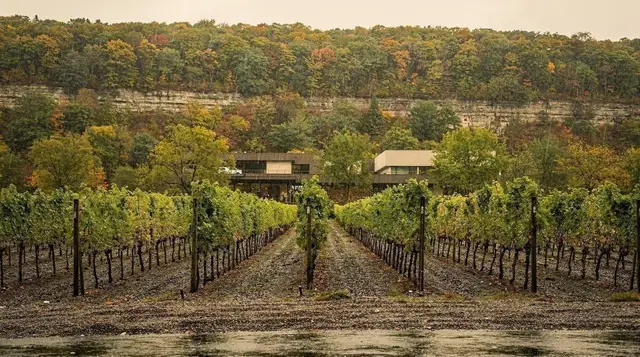
Niagara-on-the-Lake covers the flat land closest to Lake Ontario — the sub-appellations Four Mile Creek, St. Davids Bench, Niagara Lakeshore, and Creek Shores. The lake moderates temperatures here, which suits the reds: cabernet franc, gamay, and pinot noir alongside chardonnay. Most of the well-known names — Inniskillin, Peller Estates, Jackson-Triggs, Chateau des Charmes, Konzelmann — sit in this zone, within a 10- to 15-minute drive of Queen Street, which is exactly why it’s the easier half-day for anyone without a car.
The escarpment, or Twenty Valley, is the second zone, up on the Niagara Escarpment toward Beamsville and Jordan. Its sub-appellations — Beamsville Bench, Twenty Mile Bench, Short Hills Bench, Lincoln Lakeshore, Vinemount Ridge — sit at higher elevation with better drainage, and the zone leans harder into Riesling alongside chardonnay and pinot noir. Wineries here — Tawse, Thirty Bench, Cave Spring in Jordan Village, Vineland Estates — tend to be smaller and quieter than the big Niagara-on-the-Lake estates, with fewer tour buses.
A single day can realistically cover three or four stops in one zone, or two-and-two if you’re comfortable with more driving (done by someone other than you — see below). Trying to do both zones properly in one afternoon usually means rushing through each.
| Zone | Distance from the falls | Character | Known for |
|---|---|---|---|
| Niagara-on-the-Lake | ~26 km, ~25 min | Flat, lakeside, closest to town | Cabernet franc, chardonnay, big-name estates |
| Beamsville Bench / Twenty Valley | ~35–45 km, ~35–45 min | Escarpment, higher elevation | Riesling, smaller family wineries |
For a fuller rundown of what to expect at each, see the Niagara wine route guide, and separately the Niagara-on-the-Lake wineries and Twenty Valley and Beamsville Bench wineries breakdowns, plus a look at the grapes and appellations themselves.
Ice wine: a real thing, not an all-year tasting menu
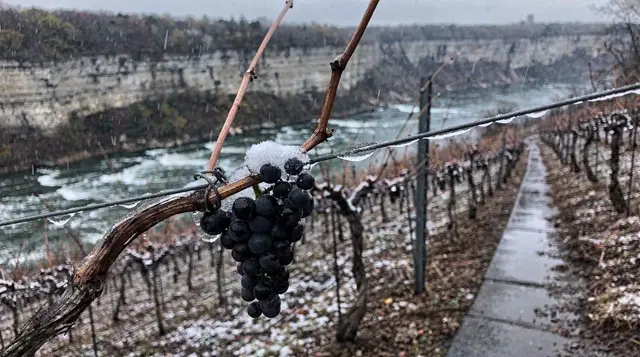
Ice wine comes up in almost every conversation about Niagara, and it’s worth being precise about what it actually is. Under VQA rules, ice wine is made from grapes — usually vidal, sometimes riesling or cabernet franc — left on the vine and harvested only once they’ve frozen naturally to -8°C or colder, typically in December or January. The sugar concentrates as the water in the grape freezes out, which is what makes the wine sweet and small-batch. Canada, and Niagara specifically, is the largest producer of ice wine in the world; Inniskillin put the region on the map internationally after winning the Grand Prix d’Honneur at Vinexpo in 1991.
None of that means ice wine is sitting open at a tasting bar every week of the year the way a table red is. It’s bottled and sold year-round, but many wineries pour it only in small measures, by request, or as part of a specific ice wine flight — and a handful only bring it out seasonally around the harvest itself. If tasting ice wine is a must for your visit, call ahead and ask specifically, rather than assuming it’s on every standard flight. See ice wine explained for how it’s made and what a bottle costs.
The one rule: nobody drives after tasting
This is the part a lot of self-guided plans skip past, and it shouldn’t be skipped. Ontario wineries pour real 1- to 2-ounce tasting measures, several times over, at three or four stops — that adds up fast, and Ontario’s roadside impairment laws are strict. Driving yourself from winery to winery, tasting properly at each one, isn’t a viable plan. There are three honest ways around it:
- A tour with a driver. This is the simplest fix and the reason most visitors don’t attempt a self-drive wine day at all. Small-group and private options exist at every price point — from a few hours to a full day, with or without lunch.
- The Niagara River Recreation Trail. A roughly 56 km paved cycling path runs along the river between the falls and Niagara-on-the-Lake, and several wineries sit close enough to a bike route to make a slower, self-paced day work — provided you’re honest about how much you taste versus how much you sip.
- A designated driver in your own group, which works if someone genuinely doesn’t mind skipping the tastings.
For the tour route, a few options cover different paces and budgets. The Niagara-on-the-Lake Wine Whiskey Tour covers multiple stops with a driver included, which is the most straightforward way to see several wineries without worrying about the drive back. For an evening version with dinner built in, the Private Sunset Wine Tour with Dinner Niagara-on-the-Lake pairs tastings with a proper meal rather than treating food as an afterthought.
And for a day that mixes the town itself with the wine — walking Queen Street, then tasting — the Niagara-on-the-Lake Guided Walking Tour W Food Winebeer is built around that combination specifically. A full rundown of the driver-versus-self-drive trade-off is in wine tasting day with a driver, and the cycling option is covered in cycling the wine route.
A sample day
There’s no single correct order, but a workable structure for a first visit looks like this:
Morning — Drive or ride the Parkway to Niagara-on-the-Lake, arriving by mid-morning. Walk Queen Street for an hour: the Niagara Apothecary, a coffee stop, a look at the Prince of Wales. If a Shaw Festival matinee interests you, this is when to check what’s showing.
Midday — First winery stop, ideally one of the closer Niagara-on-the-Lake estates. A light lunch on-site if the winery offers one; several of the bigger names do.
Afternoon — Two more tastings, either staying in the Niagara-on-the-Lake zone for an easy day or pushing up to the Beamsville Bench if you’ve got a driver and want the Riesling-focused estates. This is where the driver question actually matters — plan the stops around whoever’s arranging the transport, not the other way around.
Early evening — Back into town for dinner, or timed to catch an evening Shaw performance if that’s part of the plan. Drive back to the falls after, once tasting is well behind you, or let the tour handle the return leg.
A private full-day option that folds the falls sightseeing and the wine country into one itinerary, run by a single driver for your group, is the Niagara-on-the-Lake & Niagara Falls Private Custom Day Trip — useful if you’d rather not split the day into a separate falls visit and a separate wine day.
For groups who’d rather spend the afternoon on the water than in a tasting room, the Niagara-on-the-Lake Kayaking Tour on the Niagara River is a reasonable alternative or add-on for the non-drinkers in the party.
More structured day plans, including versions that combine this with other stops, are in things to do: wine tours and the wine and food day itinerary.
What it costs
Rough figures, in Canadian dollars, per person:
| Item | Typical range |
|---|---|
| Winery tasting (per stop) | 10–25 CAD, often waived with a bottle purchase |
| Lunch at a winery | 25–45 CAD |
| Small-group tour with driver, half-day | 100–160 CAD |
| Private tour with driver, full day | 180–280 CAD |
| Shaw Festival ticket (matinee) | 40–90 CAD depending on show and seating |
| Bike rental for the Recreation Trail | 30–45 CAD per day |
These are ranges, not fixed prices — check current listings before you book, and be aware that Ontario prices are in CAD while anything priced on the American side of the border (a separate day trip entirely) is in USD.
Where this trip doesn’t go
Worth being upfront about the edges of this itinerary. Queenston and Fort George are close enough to see from the Parkway but deep enough in their own right — the War of 1812 sites, the Laura Secord story — that squeezing them into a wine day usually shortchanges both. St. Catharines and the Welland Canal, with its eight locks and the Lock 3 viewing platform, sit further along the same road but function as a separate excursion, not an extension of this one. And ice wine, again, isn’t a tasting-room fixture every day of the year — treat it as a specific product tied to a specific harvest, not a guaranteed pour.
For a wider comparison of how this day trip stacks up against other options from the falls, see day trip to Buffalo and the general things to do in Niagara-on-the-Lake category page.
Niagara-on-the-Lake and wine country day trip FAQ
How far is Niagara-on-the-Lake from Niagara Falls?
About 26 km along the Niagara Parkway, roughly 25 minutes by car with no traffic. The road hugs the Niagara River the whole way, so it’s a scenic drive rather than a highway shortcut.
Can I drive myself between wineries?
You can drive to the first one. After that, no — Ontario’s tasting rooms pour real measures, not sips, and a DUI stop on the Parkway ends the day badly. Book a driver, join a small-group tour, or ride the Niagara River Recreation Trail between stops instead.
Is ice wine available to taste any time of year?
The wine is sold year-round, but it’s made from grapes harvested frozen, usually in December or January, under Vintners Quality Alliance rules. It isn’t a separate on-demand tasting experience every visit — some smaller producers pour it seasonally or by request, so ask before you build a day around it.
Niagara-on-the-Lake wineries or the Twenty Valley — which is better for a first visit?
Niagara-on-the-Lake is closer to the falls, flatter, and easier without a car. The Twenty Valley (Beamsville Bench and around) sits up on the escarpment with more elevation, more Riesling specialists, and fewer bus tours. A first-timer with half a day should stay in Niagara-on-the-Lake; a full day with a driver can cover both zones.
Do I need reservations for wine tastings?
Larger estates like Peller and Jackson-Triggs take walk-ins most days, but smaller family wineries often want a call or a booking, especially on summer weekends and during harvest in September and October.
Is the Shaw Festival worth planning the day around?
If you like theatre, yes — it runs April to December with a small, well-regarded repertory season, and matinees make it easy to combine with an afternoon of tasting. If you’re only passing through for a couple of hours, Queen Street and one or two wineries make more sense than rushing a show.
How much does a wine country day trip cost?
Tastings typically run 10 to 25 CAD per person at each winery, waived with a bottle purchase at some. A guided small-group or private tour with a driver adds roughly 100 to 250 CAD per person depending on group size and inclusions, which covers the driving problem entirely.
Niagara wine country and icewine tours on GetYourGuide
Verified deep-linked GetYourGuide tours. Book through these links and we earn a small commission at no cost to you.
GetYourGuide does not provide a product photo for this activity — the image shows the meeting point, photographed by us.