Cycling the Niagara wine route
Can you cycle to Niagara's wineries?
Yes, but the paved Niagara River Recreation Trail runs along the river and doesn't reach most wineries directly. Expect to leave the trail and ride short stretches of open, car-shared rural road to reach tasting rooms, mostly around Niagara-on-the-Lake.
The trail gets you close, not there
The Niagara River Recreation Trail is the backbone of any cycling trip through wine country, and it’s a genuinely good piece of infrastructure: about 56 kilometres of mostly paved, mostly flat multi-use path running along the Niagara River from Fort Erie up to Niagara-on-the-Lake, largely following the Niagara Parkway. It’s part of the wider Greater Niagara Circle Route, it’s separated from car traffic for most of its length, and it’s flat enough that you don’t need to be a serious cyclist to enjoy a few hours on it.
What it is not is a wine trail. The trail follows the river, and the vineyards sit inland, on the St. Davids Bench, along Four Mile Creek, and across the flat lakeshore benchlands around Niagara-on-the-Lake. To actually reach a winery, you leave the paved, protected trail and ride a stretch of open rural road shared with cars, farm trucks, and the occasional tour bus. That’s the trade-off nobody selling the “bike the wine route” idea tends to mention up front, and it’s worth planning around rather than discovering at the first turn.
The good news is that around Niagara-on-the-Lake, those road detours are short and the terrain is close to flat, since you’re still down on the lakeshore plain. The wineries clustered in that end of the Niagara wine region — the Four Mile Creek, St. Davids Bench, Niagara Lakeshore, and Creek Shores areas — are realistically reachable by a rider on a standard bike over a half-day or full day. Twenty Valley and the Beamsville Bench, further west and up on the escarpment, are a different proposition and a different trip; more on that below.
What a realistic day looks like
Start in Niagara-on-the-Lake itself, not at the falls. Riding the full 26 kilometres from Niagara Falls to Niagara-on-the-Lake along the Niagara Parkway is a pleasant enough ride on its own, but doing it before you’ve even reached a winery eats most of your morning and your legs. Most riders drive, take a shuttle, or arrive by other means, then rent a bike locally or bring one along.
From town, a loop through the nearby wineries typically covers somewhere between 20 and 40 kilometres depending on how many stops you build in and how much doubling back you’re willing to do, since the trail and the winery driveways don’t always connect in a straight line. Figure three to five tastings as a realistic ceiling for a day that also involves riding between them — more than that and you’re spending more time drinking than cycling, which somewhat defeats the point, and raises the safety question covered further down.
A sensible order: leave town on quiet streets, pick up the river trail heading toward Queenston, detour inland on Four Mile Creek Parkway or similar side roads for your first one or two wineries, loop back toward the lakeshore for lunch, then finish with an easier winery close to town before returning your bike. Building in a proper lunch stop matters as much for pacing as for food — it breaks the day into two shorter rides rather than one long one under a rising sun.
Bike rental and gear
Renting in Niagara-on-the-Lake rather than at the falls is the practical move: local shops rent hybrid bikes, road bikes, and increasingly e-bikes, generally somewhere in the CAD 30 to 50 per day range plus a deposit, though it’s worth checking a specific shop’s current rates rather than treating that as fixed. A hybrid or comfort bike with wider tires handles the mix of paved trail and rougher rural shoulder better than a road bike with skinny tires.
An e-bike is worth the extra cost if you’re not a confident or frequent cyclist, if you’re covering more ground than the flat Niagara-on-the-Lake loop, or if you’re at all tempted by the Twenty Valley and Beamsville Bench region, where the escarpment adds real climbing. A guided e-bike tour built for that terrain exists for exactly this reason:
a guided e-bike tour through the Beamsville Bench with wine tastings includedThat option is worth flagging specifically because it solves the trail’s biggest limitation for this part of the region: there’s no equivalent of the river trail up on the escarpment, so a self-guided ride there means climbing on open rural roads the whole way, on top of the tasting-and-riding trade-off. Pair the flat river-trail loop around Niagara-on-the-Lake with a driven or e-assisted trip for Twenty Valley rather than trying to ride both in one day.
Bring water, sunscreen, and a way to carry a bottle or two if you buy anything — most wineries will hold purchases for pickup at the end of your visit, but not all, so ask before you tour the vines. A basic repair kit or at least knowing where the nearest bike shop is matters more out here than it would on a city ride, since cell coverage and services thin out between towns.
Safety on the road, not just the trail
The paved river trail is the easy, low-risk part of the day. The rural roads connecting it to the wineries are where the actual judgment calls live. Ontario’s Highway Traffic Act treats a bicycle as a vehicle: ride single file, signal turns, and use the shoulder or a marked bike lane where one exists. Not every road out here has one — some stretches have a narrow gravel shoulder and a 80 km/h speed limit for cars, which is a meaningful gap in speed and space to be sharing.
A helmet is legally required only for riders under 18 in Ontario, but wear one regardless. Sightlines on these roads are broken constantly by hedgerows, vineyard rows, and the occasional farm equipment pulling out of a driveway, and drivers on a route they know well aren’t always braced for a cyclist around the next bend. High-visibility clothing helps, especially if any part of your ride happens in the lower light of late afternoon.
Fall days get short faster than they feel like they should — plan your last winery stop with enough daylight margin to get back to town or your rental drop-off point without racing dusk.
The part that actually matters: alcohol and cycling
This is the trade-off the whole idea runs into. You’re touring wineries by bike, which means the two central activities of the day — tasting wine and riding a vehicle on shared public roads — pull in opposite directions. Ontario doesn’t have a bicycle-specific blood alcohol limit the way it does for driving, but the Highway Traffic Act still allows careless-driving-style charges against a cyclist, and more to the point, riding on a rural road with cars after several tastings is genuinely dangerous regardless of what the statute books say.
The practical approaches riders actually use: taste in small pours and spit rather than swallow at each stop (most tasting rooms offer this without being asked, and don’t think less of you for it); buy bottles to take home rather than drink on site; limit yourself to one or two actual tastings and treat the rest of the stops as tour-only; or split the day so the riding happens in the morning and the drinking happens once you’re done and someone else is driving.
If drinking properly is the actual point of your day, a driven tour removes the conflict entirely rather than asking you to manage it:
a small-group wine tour with lunch and a driver included a Niagara-on-the-Lake wine tour with lunch, no cycling or driving required a half-day winery tour with tastings and an optional lunch add-onNone of that is a knock on cycling the route — it’s a genuinely good way to spend a day out here, and the flat lakeshore terrain around town makes it accessible to riders who wouldn’t attempt it elsewhere. It’s just two different days: a cycling day with modest tasting, or a tasting day with someone else behind the wheel.
Why fall
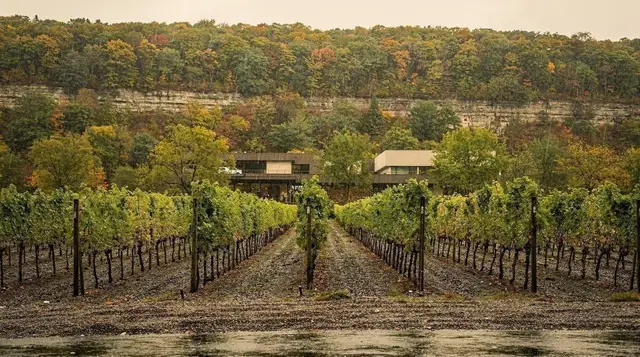
Every season technically works, but fall — roughly mid-September through October — is the one that lines up best with cycling specifically. Temperatures typically sit in a comfortable 15 to 20 C range for riding, well below the humid heat of a Niagara summer, and the vines are at their most photogenic as leaves turn and harvest gets underway at working wineries. Traffic on the rural roads tends to be lighter than the peak of summer tourist season too, which matters more than it sounds like it should when you’re sharing a narrow shoulder.
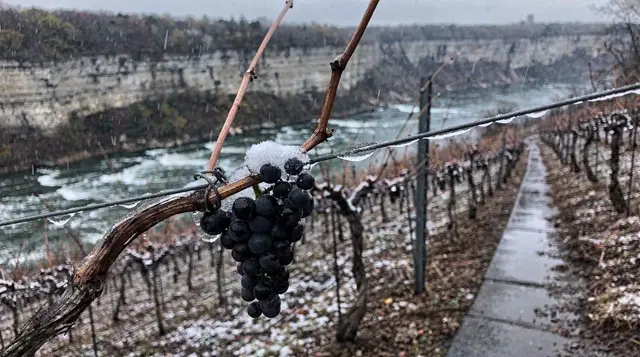
Summer isn’t a bad choice, but the combination of higher heat, real humidity, and heavier tourist and delivery traffic on the same roads makes for a tougher, less pleasant ride, and you’ll want an earlier start to beat the worst of the afternoon heat. Spring can bring mud on some of the unpaved connector paths and shorter operating hours at wineries still ramping up for the season. Winter effectively takes cycling off the table for this trip — several wineries cut back hours, and riding an unheated, sometimes icy rural road for tasting-room stops isn’t worth the risk for the reward.
For a broader look at how the seasons play out across the whole region, not just for cycling, see best time to visit Niagara Falls and fall in Niagara Falls.
Twenty Valley and the Beamsville Bench: a separate trip
Everything above assumes a Niagara-on-the-Lake-based loop, because that’s what the river trail actually sets you up for. The Niagara wine region also includes Twenty Valley and the Beamsville Bench, up on the Niagara Escarpment further west — a distinct set of appellations with their own character, covered in its own dedicated guide rather than repeated here.
The river trail doesn’t reach that area at all, so a self-supported ride there means rural roads with real elevation change from the start, not the flat lakeshore riding described above. That’s a legitimate ride for a stronger or more experienced cyclist, but it’s a materially harder day than the Niagara-on-the-Lake loop, and it’s exactly the terrain the guided e-bike tour linked above is built to handle. If Twenty Valley is the priority, treat it as a separate outing — by e-bike tour, by car, or as its own dedicated cycling day — rather than trying to fold it into the same trip as the river trail.
Getting to the start
Most riders base this day out of Niagara-on-the-Lake rather than the falls themselves. If you’re staying at the falls, driving or taking a shuttle to town before renting a bike saves the better part of an hour each way compared with riding the full Niagara Parkway distance on top of the wine-country loop. For the wider logistics of getting from the falls to town, including transit options, see day trip to Niagara-on-the-Lake and wine country and Niagara-on-the-Lake day trip.
For background on the wineries themselves — which ones to prioritize, what the different benches and appellations mean, and what a tasting actually costs — see the Niagara wine route guide, Niagara-on-the-Lake wineries, and Niagara wine appellations and grapes. If ice wine is on your list, ice wine explained covers what makes it different before you commit a tasting slot to it. And for the alternative to all of the above, wine tasting day with a driver lays out what a fully driven day looks like instead.
More things-to-do context sits under wine tours and biking generally, and a full multi-stop plan is in wine and food in Niagara.
Cycling the wine route: frequently asked questions
Does the Niagara River Recreation Trail go past the wineries?
No. The trail hugs the Niagara River from Fort Erie to Niagara-on-the-Lake, and most wineries sit a few kilometres inland, along Four Mile Creek Parkway, York Road, and other rural roads. You leave the paved trail and ride on open roads shared with cars to reach a tasting room.
How fit do you need to be?
The river trail itself is flat and paved, suitable for a casual rider with no cycling experience. The road detours around Niagara-on-the-Lake are mostly flat too. Twenty Valley and the Beamsville Bench, up on the escarpment, involve real climbs and are a different trip, better suited to an e-bike or a car.
Where can you rent a bike?
Bike shops in Niagara-on-the-Lake rent hybrid and road bikes, and increasingly e-bikes, generally in the CAD 30 to 50 per day range plus a deposit. Renting there, rather than at the falls, saves you the 26-kilometre ride each way just to reach the wine region.
Is it legal or safe to drink and then keep cycling?
Ontario’s Highway Traffic Act treats a bicycle as a vehicle, and cycling carelessly or while impaired can still result in charges even without a bicycle-specific blood alcohol limit. More practically, you’re sharing rural roads with cars and pickup trucks with no shoulder in places, so riding after several tastings is a real safety risk, not just a legal grey area.
What’s the best season for this?
Fall, from mid-September through October. Temperatures sit in a comfortable 15 to 20 C range, humidity drops, the vines are at their most photogenic, and many wineries are mid-harvest. Summer works but adds heat and higher humidity; spring can be muddy and some wineries keep shorter hours before the season ramps up.
Do I need a helmet?
Ontario law requires a helmet only for cyclists under 18, but wear one regardless. You’re riding unfamiliar rural roads with sightlines broken by hedgerows and vineyard rows, and drivers aren’t always expecting cyclists on those stretches.
Is there an easier way to see the wineries without cycling all of it yourself?
Yes. An e-bike tour handles the hillier ground around the Beamsville Bench for you, and a driven wine tour removes the road-riding and the drinking trade-off entirely. Both are worth considering if the point of the day is the wine, not the ride.
Niagara wine country and icewine tours on GetYourGuide
Verified deep-linked GetYourGuide tours. Book through these links and we earn a small commission at no cost to you.
GetYourGuide does not provide a product photo for this activity — the image shows the meeting point, photographed by us.