Twenty Valley and the Beamsville Bench: the escarpment wineries
What's different about wineries on the Beamsville Bench and in Twenty Valley?
These are escarpment sub-appellations west of Niagara-on-the-Lake, closer to St. Catharines and Jordan Village. The higher, cooler benchland soils suit riesling, pinot noir and chardonnay, and the tasting rooms here are smaller and less crowded than the Niagara-on-the-Lake circuit.
A different stretch of the wine route
Most visitors who ask about “Niagara wine country” are pointed toward Niagara-on-the-Lake, and for good reason: it’s the closest cluster of tasting rooms to the falls and the easiest to combine with a half-day out. But it isn’t the whole wine region, and treating it as such means missing the Beamsville Bench, Twenty Mile Bench, Short Hills Bench, Lincoln Lakeshore and Vinemount Ridge — five sub-appellations that sit further west along the Niagara Escarpment, closer to St. Catharines and Jordan Village than to Niagara-on-the-Lake. This guide covers that stretch on its own terms.
The trap is geographic, and it’s an easy one to fall into when planning from a map that shows “Niagara wine country” as a single blob. It isn’t. The escarpment benches are a separate drive, roughly 35 to 40 kilometres and about 35 to 40 minutes by car from the falls via the QEW, and a further 20 to 25 minutes past St. Catharines if you’re coming from Niagara-on-the-Lake itself. Pack both areas into one day and you’ll spend more time in the car than in a tasting room. Pick one, do it properly, and save the other for a second visit or a longer trip.
If you haven’t yet decided which part of the region suits your trip, the Niagara wine route guide lays out the whole peninsula, and the guide to Niagara wine appellations and grapes explains the vocabulary used below. For the other half of the story, the Niagara-on-the-Lake wineries guide covers the lakeshore tasting rooms that most first-time visitors see first.
Why the escarpment benches taste different
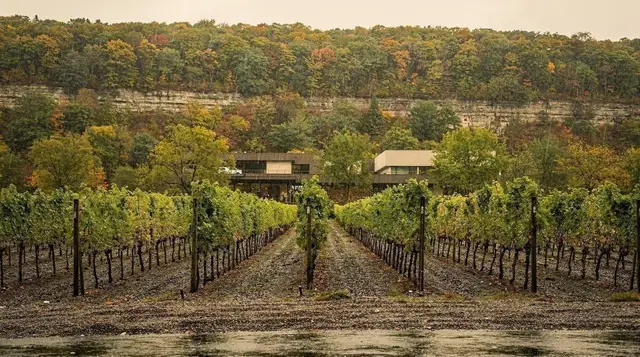
All of these sub-appellations sit within the broader VQA Niagara Peninsula and Niagara Escarpment designations, but their character comes from elevation and exposure rather than from proximity to Lake Ontario. The land rises from the lake plain up the face of the Niagara Escarpment — the same limestone ridge that runs to Niagara Falls itself — and the benches are the terraced slopes partway up that rise. Cooler air drains downhill off the escarpment at night, which lengthens the growing season and helps preserve acidity in the grapes, particularly riesling.
That’s the practical reason the Beamsville Bench and Twenty Mile Bench in particular are associated with riesling and pinot noir rather than the fuller reds you’ll find closer to the lakeshore. Chardonnay and cabernet franc also perform well on the benchland soils, which mix clay, sand and limestone in varying proportions from one property to the next — ask any winemaker here and they’ll talk about soil before they talk about vintage.
Vinemount Ridge, the highest and most easterly of the group, and Lincoln Lakeshore, the flattest and closest to the water, bookend the range: expect more structured whites and cool-climate reds from the ridge, and slightly softer, earlier-ripening fruit from the lakeshore plots.
The five sub-appellations, briefly
| Sub-appellation | Character | Closest town |
|---|---|---|
| Beamsville Bench | The best-known name on this list; riesling and pinot noir on escarpment slope soils | Beamsville |
| Twenty Mile Bench | Named for Twenty Mile Creek; similar profile to the Beamsville Bench, slightly cooler | Jordan Village |
| Short Hills Bench | Smaller, less developed for tourism; several boutique producers | Jordan Village |
| Lincoln Lakeshore | Flatter, closer to Lake Ontario; softer reds and earlier harvests | Vineland |
| Vinemount Ridge | Highest elevation in the group; structured whites, cool-climate reds | Beamsville |
None of these are marketed hubs in the way Niagara-on-the-Lake’s Queen Street is. There’s no single main street lined with tasting rooms — the wineries sit along Regional Road 81 (the Niagara Stone Road) and the side roads running up toward the escarpment, which means a day here is a driving day between individual stops, not a walking day.
Ravine, Tawse and the higher-elevation producers
Ravine farms biodynamically on the Twenty Mile Bench and built its reputation on cabernet franc and chardonnay from estate fruit; the on-site restaurant, in a converted 1868 farmhouse, is worth booking ahead for lunch rather than treating as a walk-in option. Tawse, also on the Twenty Mile Bench, is one of the region’s most decorated producers and works gravity-flow winemaking into a building set into the escarpment slope — the tasting room looks straight down the vineyard rows toward the lake on a clear day, and it’s one of the more striking views in this stretch of the wine route.
Thirty Bench, on the Beamsville Bench proper, specializes almost entirely in riesling across several small-lot bottlings, which makes it a useful stop if you want to taste how much a few hundred metres of elevation and soil type can change the same grape. Vineland Estates, one of the longer-established names here, sits on a striking Twenty Mile Bench site with a restaurant terrace overlooking the vineyard down to the lake — it’s set up for a slower visit, not a quick tasting-room pour.
Two Sisters and Henry of Pelham
Two Sisters Vineyards, on the Beamsville Bench, takes a different approach from most of its neighbours: a modern, architecturally deliberate winery building with a full restaurant, built around estate cabernet franc, chardonnay and a small-batch approach to winemaking. It reads more like a destination stop than a quick tasting, and reservations for the restaurant fill up on weekends through the growing season.
Henry of Pelham, on the Short Hills Bench near St. Catharines, is a family-run estate going back five generations on the same land, with a long track record on riesling, baco noir and a well-regarded sparkling program. It’s a good stop for visitors who want a straightforward tasting-room experience without a restaurant reservation attached.
Cave Spring and Jordan Village
Cave Spring Cellars, on the Twenty Mile Bench, is inseparable from Jordan Village, the small cluster of restaurants, shops and inns at the base of the bench where the winery’s tasting room and restaurant both sit. Jordan Village isn’t a wine destination the way a winery estate is — it’s a walkable stop for a coffee, a sit-down lunch between tastings, or an overnight if you want to base yourself in the middle of the escarpment wine district rather than driving back to St. Catharines or the falls each evening. Cave Spring itself has one of the longer histories in the region for riesling specifically, and its restaurant, On the Twenty, is a reliable lunch stop if you’ve booked ahead.
Where Jordan fits among the other stops
Jordan Village is the natural midpoint of a day on the Twenty Mile Bench, and it pairs well with a morning at one of the higher-elevation estates and an afternoon in a smaller tasting room. If you want a second small town on the same route, Port Dalhousie on the lake side of St. Catharines is a short drive away and gives you a very different, waterfront setting for an early dinner after the tastings are done. And if you’re curious about the valley’s neighbouring district, the broader Niagara wine region page shows how the escarpment benches connect to the rest of the peninsula.
A useful way to think about the day is by pace. Start with the producer that needs a reservation, since that fixes your lunch. Then choose one stop that is focused on a single grape, such as the riesling specialist, and one that is more of an estate experience with a view. Leave the last slot open: tasting rooms differ in how late they pour, and having flexibility at the end of the day means you won’t rush the one you most wanted to see. Water, bread and a break between stops matter more than most people expect, and a rented car’s boot is the right place for the bottles you buy, kept out of direct sun.
Planning a day on the benches
A realistic day here means three tastings, maybe four if you keep pours brief and skip the restaurant stop, plus lunch somewhere along the way — either at one of the wineries with a dining room (Ravine, Two Sisters, Vineland Estates and Cave Spring’s On the Twenty all have one) or in Jordan Village itself. Reservations matter more here than the casual, walk-in feel of some Niagara-on-the-Lake tasting rooms would suggest; the restaurant seats in particular book out on weekends from late spring through fall harvest.
Because the wineries sit along rural roads with no meaningful transit connection, this is a driving day. If you’re the one driving, plan on spitting more than sipping, or designate someone who isn’t tasting — there’s no substitute for a driver here the way there sometimes is closer to town.
If you’d rather not drive at all, guided wine touring booked in advance is an option worth considering: a small-group wine tour with a seated lunch included takes the driving decision off the table entirely, and a similar scenic vineyard lunch tour covers the region with a meal built into the day. Both are worth checking for which wineries are on the day’s route before booking, since itineraries can lean toward the Niagara-on-the-Lake side of the region depending on the operator and the season.
For a lighter afternoon that mixes tasting with something other than wine, an outing combining local beer and wine tastings or a tour pairing wine with a whisky stop covers more ground for visitors who don’t want a full day of wine alone. As with the lunch tours, confirm the day’s stops before booking if visiting the escarpment benches specifically matters to you — some of these operators run primarily around Niagara-on-the-Lake.
How this compares to Niagara-on-the-Lake
The honest comparison: Niagara-on-the-Lake is easier — closer to the falls, walkable in patches, more tasting rooms within a short drive of each other, and a built-in town to explore afterward. The escarpment benches trade that convenience for smaller producers, a quieter tasting-room experience, and — for riesling and pinot noir specifically — arguably the more distinctive wine in the region. Neither is objectively better; they’re different half-days, and conflating them on an itinerary is the most common planning mistake for this part of the trip.
If your time is limited to a single afternoon and you’re staying near the falls, Niagara-on-the-Lake is the practical choice purely on drive time. If you have a full day, a rental car, and want to taste something other than the Niagara-on-the-Lake style, the benches are worth the extra 20 to 25 minutes each way.
Getting there and getting around
From Niagara Falls, take the QEW toward Hamilton/Toronto and exit at the Beamsville or Vineland interchanges, roughly 35 to 40 minutes depending on traffic. From St. Catharines, it’s closer to 15 to 20 minutes to the nearest Beamsville Bench properties. There’s no winery shuttle or transit service covering this stretch, so a car — your own, a rental, or a tour with a driver — is the only realistic way to link more than one estate in a day.
If you’re combining the trip with other stops along the Niagara Peninsula, the Welland Canal and its Lock 3 viewing platform sit roughly midway between the falls and the escarpment benches and make a reasonable detour on the way out or back. Cyclists sometimes link sections of this wine district with the Niagara River Recreation Trail further east, though the two aren’t directly connected and the escarpment roads have less consistent shoulder space for riding than the flatter Niagara Parkway.
Other ways to build the trip
Not everyone wants to drive. If you’d rather leave the car behind, the wine tasting day with a driver guide explains what a chauffeured day looks like, and cycling the wine route covers the flatter parts of the district for those who want to ride between stops. For a combined day that includes the lakeshore, see the day trip to Niagara-on-the-Lake and wine country, and for a full plan built around food and wine, the wine and food itinerary strings tastings and meals together over a longer stay.
If you’re coming from Toronto, the drive along the QEW passes the escarpment benches before it reaches the falls, which makes them a sensible stop on the way in. The Toronto to Niagara Falls guide covers that route, and the one day from Toronto itinerary shows how a single day can be shaped around it. If a beer or spirits stop appeals more than another winery, Niagara breweries and distilleries is worth a look before you finalise the day.
A note on ice wine here
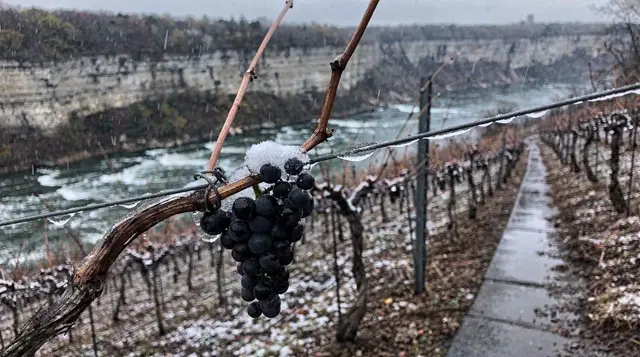
Ice wine production leans more heavily toward the Niagara Lakeshore bench near Niagara-on-the-Lake, where the flat, open vineyards close to the lake are better suited to the very specific conditions ice wine grapes need. That said, several producers on this list — check directly with each winery, since vintages and availability change year to year — do make small quantities of ice wine from the escarpment benches. If ice wine is the priority, don’t assume every stop on this route will have a bottle in the tasting lineup; call ahead or check the winery’s current release list before building your day around it. The ice wine explained guide covers how it is made and why availability varies from year to year.
Before you go
Book restaurant seats at Ravine, Two Sisters, Vineland Estates or Cave Spring’s On the Twenty in advance, especially on weekends between May and October. Confirm which tasting rooms require reservations versus accept walk-ins — this changes by property and by season, and a phone call the morning of your visit avoids a wasted stop. And build in the extra drive time from wherever you’re staying; this isn’t a district you stumble into on the way to somewhere else, it’s a destination in its own right.
Niagara wine country and icewine tours on GetYourGuide
Verified deep-linked GetYourGuide tours. Book through these links and we earn a small commission at no cost to you.
GetYourGuide does not provide a product photo for this activity — the image shows the meeting point, photographed by us.