The Niagara wine route: how to plan your day
What is the Niagara wine route and how do I visit it?
It's the string of roughly 90 VQA Niagara Peninsula wineries spread across two zones, Niagara-on-the-Lake near the lakeshore and Twenty Valley on the escarpment. Most visitors base themselves in one zone, taste at three or four wineries, and get between them by hired driver, organized tour, or bicycle rather than by driving themselves.
One appellation, two very different zones
“The Niagara wine route” isn’t a single signed road — it’s shorthand for the roughly 90 wineries scattered across the Niagara wine region, all falling under the VQA Niagara Peninsula appellation. What trips people up is treating it as one compact loop. It isn’t. It’s two zones with different landscapes, different driving distances, and different logistics, and the biggest planning mistake is trying to do both in a single afternoon.
This guide covers the appellation at a level useful for building an itinerary: what VQA actually guarantees, how the two zones differ, and — the part most wine-route pages skip — how to get between tasting rooms once you’ve started drinking. It deliberately does not walk through individual wineries grape by grape, or explain ice wine in depth. Those live on their own pages, linked below, because they deserve more room than a planning guide can give them.
What the VQA Niagara Peninsula appellation actually means
VQA stands for Vintners Quality Alliance, and it’s Ontario’s regulated wine appellation system, not a marketing label a winery can slap on a bottle by choice. A bottle labelled VQA Niagara Peninsula has to meet rules about where the grapes were grown, what varieties went in, and how the wine was made. It’s the closest thing this region has to an AOC, and it’s the reason a Niagara VQA wine is a meaningfully different purchase from a blended “Product of Canada” bottle that may contain imported bulk wine.
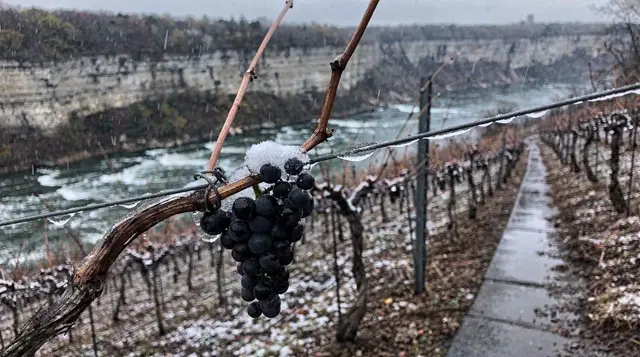
The appellation covers close to 90 wineries in total, from large estates with restaurants and tour buses to five-acre family operations that pour from a converted barn. The grape varieties that do best here — riesling, chardonnay, pinot noir, cabernet franc, gamay, and vidal for ice wine — are shaped by Lake Ontario’s moderating effect on the escarpment’s microclimate. For the full rundown on grapes and the appellation’s official sub-regions, see the dedicated guide on Niagara wine appellations and grapes; this page sticks to the practical question of where to go and how to get there.
Niagara-on-the-Lake: the lakeshore zone
The Niagara-on-the-Lake cluster sits on flat benchland close to the lake, and it’s the zone most first-time visitors default to because it’s easy to combine with the town itself. You can walk Queen Street in the morning, taste at two or three wineries in the afternoon, and be back in town for dinner without much driving in between. The terrain is flat enough that several wineries here are realistically reachable by bicycle, particularly along the Niagara River Recreation Trail, which runs close to a handful of cellar doors.
This zone includes the sub-areas of Four Mile Creek, St. Davids Bench, Niagara Lakeshore, and Creek Shores — distinctions that matter to a sommelier more than a day-tripper, and that get their own treatment in the appellation guide linked above. What matters for planning is simpler: short distances, flat roads, and a town at the centre of it that gives you somewhere to eat, browse, or catch a Shaw Festival matinee if you want to break up the tastings. For winery-by-winery detail in this zone, see the Niagara-on-the-Lake wineries guide; this page won’t repeat it.
If you’re staying in Niagara-on-the-Lake itself rather than at the falls, you’re already at the centre of this zone and can plan a wine afternoon with minimal transit. If you’re basing at the falls, it’s about 26 kilometres up the Niagara Parkway, roughly 25 minutes by car — assuming someone other than the wine drinker is behind the wheel.
Twenty Valley and the Beamsville Bench: the escarpment zone
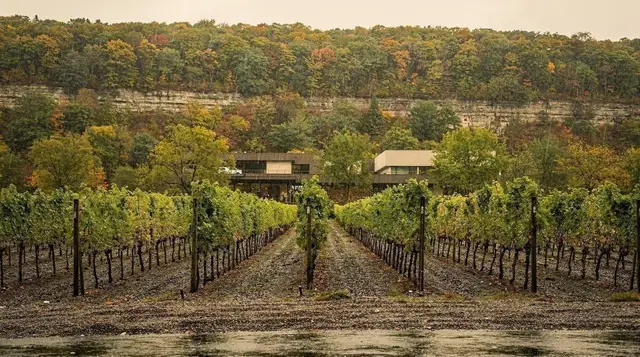
The second zone climbs the Niagara Escarpment west of St. Catharines, through what’s generally called Twenty Valley, and includes the well-known Beamsville Bench along with the Twenty Mile Bench, Short Hills Bench, Lincoln Lakeshore, and Vinemount Ridge. The character here is different: hillier terrain, wineries spread further apart along winding rural roads, and views back down over the lake that the flatter lakeshore zone doesn’t offer. It tends to be quieter than Niagara-on-the-Lake, with fewer bus tours and more of a working-vineyard feel.
Cycling is possible here but it’s a real workout, not a flat cruise — the benches are named for the escarpment’s terraces for a reason, and the climbs between them are noticeable even on a lighter bike. For most visitors without a driver, this zone works better as a car-with-driver day or a small guided tour than a self-powered one. It also sits closer to St. Catharines and Jordan Village than to the falls or Niagara-on-the-Lake, which is worth factoring in if you’re trying to combine it with other stops. The winery-level detail for this zone lives in the Twenty Valley and Beamsville Bench wineries guide.
Niagara-on-the-Lake vs. Twenty Valley, side by side
| Niagara-on-the-Lake | Twenty Valley / Beamsville Bench | |
|---|---|---|
| Terrain | Flat lakeshore benchland | Hillier escarpment terraces |
| Distance from the falls | About 26 km (~25 min) | About 30–40 km depending on winery |
| Cycling difficulty | Manageable for casual riders | Real climbs, better for fitter riders |
| Anchor town | Niagara-on-the-Lake (Queen Street, Shaw Festival) | Jordan Village, St. Catharines nearby |
| Feel | Busier, more polished, more bus tours | Quieter, more working-vineyard |
Both zones fall under the same VQA Niagara Peninsula appellation and pour largely the same core varieties, so this isn’t a question of one being “better wine” than the other. It’s a question of terrain, distance from where you’re staying, and how much company you want at the tasting bar.
Why you can’t just drive yourself between tastings
This is the part worth repeating even though it feels obvious: once you’ve had a pour, you can’t be the one driving to the next winery. Ontario treats impaired driving the same way most places do, a small tasting flight adds up faster than people expect, and wineries here are not built around a designated-driver-only visit — you’re there to taste, and the road between cellar doors is a real rural road, not a closed loop.
That leaves three realistic ways to actually move along the route:
A hired driver or car service. You (or a small group) book a driver for a half day or full day, set your own pace, and nobody in the car has to abstain. This is the most flexible option if you already know which wineries you want to visit, and it works equally well in both zones. A tour built specifically for this is the Niagara Falls guided winery tour with tastings and pickup, which handles the driving end to end.
An organized small-group tour. A guide picks the wineries — usually two to four stops — sets the schedule, and often adds a cheese board, a charcuterie plate, or a full dinner along the way. This suits people who don’t already have strong opinions about which winery to visit, or who’d rather not plan the logistics themselves.
Options worth comparing include the Niagara guided afternoon wine tour with charcuterie, the Toronto-departure Niagara wine tour for travellers based in the city, and, for an evening version with a sit-down meal, the Niagara sunset wine tour with dinner.
A bicycle, in Niagara-on-the-Lake at least. The Niagara River Recreation Trail runs flat and close to several wineries, so a self-guided day on two wheels is genuinely realistic there — you set your own pace, taste lightly at each stop, and never have to think about a designated driver at all. On the Beamsville Bench, treat cycling as a fitness activity that happens to pass wineries, not a relaxed tasting method.
Ways to cover the wine route
| Option | How it works | Rough cost (CAD, per person) | Best for |
|---|---|---|---|
| Hired driver / car service | You choose the wineries, driver handles the road | $150–$300+ for a half to full day, shared among the group | Groups who know where they want to go |
| Organized small-group tour | Guide sets the route, often includes food | $130–$220 half day; $200–$350+ full day with dinner | First-timers, solo travellers, no planning wanted |
| Bicycle (Niagara-on-the-Lake only) | Self-guided, flat trail links several wineries | Bike rental roughly $25–$50/day plus tastings | Independent travellers comfortable on a bike |
| Self-drive with a designated non-taster | One person in the group skips the wine entirely | Cost of gas/parking only | Groups where someone genuinely doesn’t mind abstaining |
None of these figures are fixed — tour pricing shifts by season, group size, and what’s included, so treat the table as a planning range, not a quote, and check current pricing before booking.
Building a day on the route
A realistic day, in either zone, means three or four wineries, not seven. Tasting flights, a vineyard walk if one’s offered, and driving or cycling time between stops eats the day faster than it looks on a map. A common pattern:
- Morning: settle into your base — Niagara-on-the-Lake town or a Twenty Valley-adjacent stay — and start with a lighter first tasting before lunch.
- Midday: a longer stop at a winery with a restaurant or patio, timed as lunch.
- Afternoon: one or two more tastings, wrapping by mid-to-late afternoon rather than pushing into evening if you’re driving back to the falls or Toronto afterward.
- Evening: if you booked a sunset tour with dinner, this is where it lands; otherwise, head back to base before fatigue and the day’s tastings catch up with you.
If you’re coming from the falls for a single day rather than staying over, see the day trip to Niagara-on-the-Lake and wine country guide for a version of this built around a return trip, or the wine and food itinerary if you want the route folded into a longer, multi-day plan. Travellers arriving from further afield can start from the Toronto to Niagara Falls guide and build the wine day in around the drive down.
What this guide doesn’t cover — and where to find it
Deliberately left out here, because each deserves its own page rather than a paragraph:
- Individual wineries and what to expect at each one — see the Niagara-on-the-Lake wineries guide and the Twenty Valley and Beamsville Bench wineries guide.
- Ice wine — how it’s made, when to buy it, and what it costs, in the ice wine explained guide.
- Grape varieties and the appellation’s official sub-regions — in the Niagara wine appellations and grapes guide.
- Cycling logistics specifically — rental locations, trail conditions, and route options, in the cycling the wine route guide.
- Breweries and distilleries, which share some of the same geography but aren’t part of the VQA system — covered separately in the Niagara breweries and distilleries guide.
Niagara wine route: frequently asked questions
Can I drive myself between wineries on the Niagara wine route?
You can drive to the region, but not between tasting stops once you’ve started tasting. Ontario’s impaired driving laws don’t bend for a small pour at a cellar door, and wineries are not set up to let a driver skip the wine and just watch. Book a driver, a guided tour, or move by bicycle instead.
What’s the difference between Niagara-on-the-Lake and Twenty Valley wineries?
Niagara-on-the-Lake sits on flat lakeshore benchland close to the town itself, with easy road distances between wineries and a historic town to combine it with. Twenty Valley, on the Beamsville Bench and neighbouring benches of the escarpment, is hillier, more spread out, and generally quieter.
Do I need to book winery visits in advance?
For a casual walk-in tasting at a larger estate, often not, but for a seated flight, a vineyard tour, or anywhere on a Saturday afternoon in September or October, book ahead. Smaller producers may only pour by appointment.
How much does a guided wine tour from the falls or Toronto cost?
Half-day guided tours with a driver and tastings at two or three wineries typically run in the CAD 130 to 220 range per person; full-day tours with lunch or dinner cost more. Prices vary by operator and season, so treat these as a starting range, not a quote.
Is cycling the wine route a realistic way to taste?
In Niagara-on-the-Lake, yes — the terrain is flat and the Niagara River Recreation Trail links several wineries directly. On the Beamsville Bench the climbs are real, so cycling there suits a fitter rider more than a casual one.
What is VQA and why does it matter here?
VQA (Vintners Quality Alliance) is the appellation and quality standard that governs wine labelled Niagara Peninsula, including where the grapes were grown and how the wine was made. A VQA label is your baseline guarantee that what’s in the glass is actually from this ground.
When is the best time of year to do the wine route?
Late September into October brings harvest, the best light on the escarpment, and full tasting rooms, though you should book ahead. Late spring through midsummer is quieter and more flexible, and several wineries stay open, at reduced hours, through winter.
Niagara wine country and icewine tours on GetYourGuide
Verified deep-linked GetYourGuide tours. Book through these links and we earn a small commission at no cost to you.
GetYourGuide does not provide a product photo for this activity — the image shows the meeting point, photographed by us.