Niagara VQA appellations and grape varieties explained
What's the difference between Niagara-on-the-Lake and Niagara Escarpment wines?
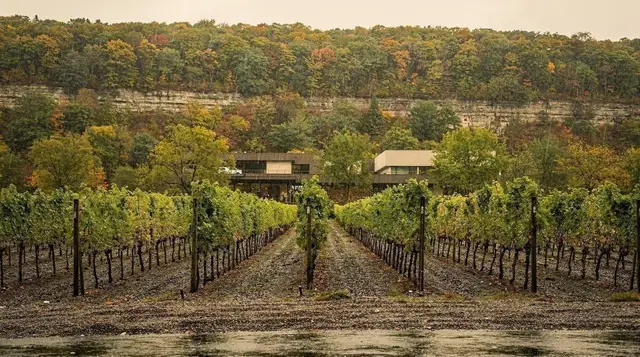
Niagara-on-the-Lake sits on flat lakeshore benchland warmed by Lake Ontario's moderating effect, favouring riesling, chardonnay and cabernet franc with riper, rounder fruit. The Niagara Escarpment appellation, on higher, cooler bench soils above the plain, tends to produce more acidity and structure in the same grapes. Neither is objectively better — they're different terroirs suited to different styles.
Reading a Niagara wine label
Pick up two bottles of riesling from the Niagara wine region and they can taste like different grapes entirely — one round and orchard-fruited, the other tight and citrusy with a mineral edge that takes a year or two to soften. The difference usually isn’t the winemaker. It’s the appellation printed in small type under the vintage: VQA Niagara-on-the-Lake or VQA Niagara Escarpment, and sometimes a bench name more specific still.
VQA — Vintners Quality Alliance — is Ontario’s appellation and quality system. A bottle labelled simply VQA Niagara Peninsula can draw grapes from anywhere across roughly 90 licensed properties in the region. A bottle naming a sub-appellation, like Beamsville Bench or Four Mile Creek, has to source at least 85 percent of its fruit from that specific zone, and the rule exists because the zones genuinely taste different.
This guide is about those differences: the two broad appellation areas, their named benches, and which of Niagara’s six signature grapes suits each. It isn’t a ranking. Escarpment fruit isn’t finer than lakeshore fruit — it’s a cooler, higher terroir that pulls acidity and structure out of the same grapes that go riper and rounder on the plain below.
The lake effect that makes any of this possible
Niagara sits at roughly the same latitude as parts of northern France, which on paper is too cold and too short a season for the grapes grown here. What changes the equation is Lake Ontario. The lake holds summer heat into autumn and releases it slowly, pushing back the first killing frost by several weeks compared to inland sites at the same latitude, and the Niagara Escarpment running along the region’s southern edge blocks cold air from pooling on the plain below it. Between the lake’s moderating effect and the escarpment’s air drainage, growers get a frost-free season long enough to ripen cabernet franc and short enough, at altitude, to keep riesling’s acid backbone intact.
That’s the whole appellation story in one sentence: distance from the lake and elevation on the escarpment are the two variables, and every named sub-appellation is really just a position on those two axes.
Niagara-on-the-Lake: the lakeshore appellations
The town of Niagara-on-the-Lake gives its name to the flatter, lake-moderated growing area northeast of the escarpment, which itself splits into four named sub-appellations running roughly parallel to the shoreline.
Niagara Lakeshore and Creek Shores sit closest to the water, on the flattest, most lake-influenced land in the peninsula. Growing seasons here run longest and warmest, which is why this strip carries a disproportionate share of Niagara’s cabernet franc, merlot and other red Bordeaux varieties — grapes that need every extra frost-free day they can get.
Four Mile Creek and St. Davids Bench, a little further from the shoreline and with more varied clay-loam soils, sit between the lakeshore strip and the escarpment proper. St. Davids Bench in particular has some elevation and stonier soil that gives it a foot in both camps — warm enough for reds, structured enough for serious chardonnay and riesling. Wineries around Queenston and St. Davids draw on this bench.
Across the Niagara-on-the-Lake appellation broadly, expect riper fruit character, softer acidity and, in reds, more generous tannin than the escarpment produces from the same grape. It’s also the most visited part of the wine region, largely because it sits directly along the scenic stretch between the falls and the town, making it the easiest wine country to combine with a day that also includes Queenston Heights or Fort George.
The Niagara Escarpment: bench appellations
South and west of Niagara-on-the-Lake, the land rises onto the escarpment itself, and the vineyards planted on its lower slopes and terraces — collectively marketed as Twenty Valley — form a second, cooler appellation with its own set of named benches.
Beamsville Bench is the best known of these, a shelf of land between the escarpment face and Lake Ontario near St. Catharines and Beamsville. Its soils are thinner and stonier than the lakeshore clay, and cold air drains off the slope at night, widening the gap between day and night temperatures. That gap is what escarpment wines are built on: it slows ripening and preserves acidity, producing riesling and chardonnay with more tension and a longer finish than their lakeshore counterparts, along with some of the region’s most structured pinot noir.
Twenty Mile Bench, Short Hills Bench and Vinemount Ridge continue the escarpment appellation further along the same shelf, each with small variations in slope, soil depth and exposure that growers argue about more than most visitors will ever taste. What they share is elevation and the cooling effect that comes with it. Wineries clustered around Jordan Village sit within this stretch and make a convenient base for exploring several benches without much driving.
If Niagara-on-the-Lake wines tend toward ripeness and roundness, escarpment wines tend toward precision — brighter acidity, firmer tannin in reds, and white wines that often reward a year or two in the bottle before they open up. Both are legitimate, deliberate styles rather than one being an unfinished version of the other.
Six grapes worth knowing
Niagara grows more than a dozen varieties commercially, but six show up often enough, and express the appellation split clearly enough, to be worth knowing before a tasting day.
Riesling
Riesling is arguably Niagara’s calling-card grape — it handles the short season well and shows the appellation difference more clearly than anything else grown here. Lakeshore riesling, from Niagara-on-the-Lake fruit, tends to be riper and more approachable young, with orchard-fruit character. Escarpment riesling, especially from Beamsville Bench or Vinemount Ridge, is tighter and more citrus-driven, often needing a year or two to round out. Styles range from bone dry to off-dry to late harvest; almost nothing here is heavily oaked.
Chardonnay
Chardonnay is planted across both appellations and made in nearly every style — steely and unoaked, barrel-fermented and buttery, or somewhere between. Escarpment sites generally produce the more mineral, structured versions favoured for serious food pairing; lakeshore chardonnay tends toward riper stone-fruit character. It’s a safe grape to taste your way through both zones in a single day, since almost every winery makes at least one version.
Pinot noir
Pinot noir is a cool-climate grape by nature, which makes the escarpment benches — Beamsville Bench especially — its natural home in Niagara, though lakeshore producers make lighter, fruitier versions as well. Niagara pinot noir rarely reaches the weight of Burgundy or Oregon examples; expect a lighter-bodied, red-fruited style, sometimes with the earthy or savoury notes escarpment sites are known for.
Cabernet franc
Cabernet franc is Niagara’s most planted red grape and arguably its best argument for the region’s reds generally. It buds and ripens earlier than cabernet sauvignon, which matters in a region where the growing season can be marginal for late-ripening reds, and it does particularly well on the warmer lakeshore benches near Niagara-on-the-Lake — Four Mile Creek and Niagara Lakeshore in particular. Expect red fruit, a herbal or peppery edge, and firmer tannin than you’d find in warmer-climate versions of the same grape. Some producers blend it with merlot and cabernet sauvignon in Bordeaux-style reds; others bottle it alone.
Gamay
Gamay, the grape behind Beaujolais, is a smaller but growing presence in Niagara, planted in pockets of both appellations. Niagara versions tend to sit between the light, fruity style of basic Beaujolais and something more structured — a reasonable middle ground for visitors who want a lighter red without moving all the way to rosé. It’s worth asking for specifically, since it rarely gets top billing on tasting menus next to cabernet franc and pinot noir.
Vidal
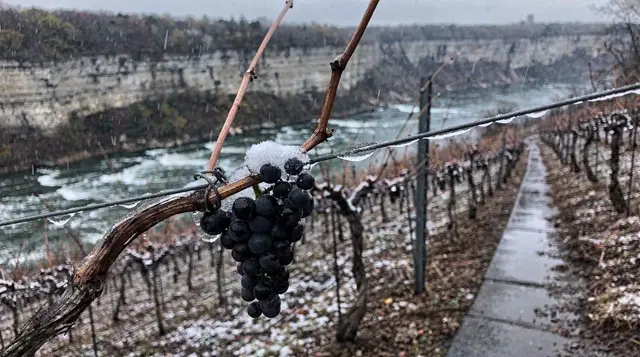
Vidal is a white hybrid grape, and in Niagara it exists almost entirely for one purpose: ice wine. Its thick skin holds up on the vine through the hard frosts of December and January that ice wine production requires, which is why you’ll see it planted in both appellations specifically for that late harvest. As a table wine on its own, vidal is uncommon and usually unremarkable — its value here is almost entirely as ice wine grapes. For how that wine is actually made, and why Canada leads the world in producing it, see our dedicated guide to ice wine.
Same grape, different terroir
The table below is a rough guide, not a rule — individual sites within each appellation vary, and a skilled winemaker can push style either direction. But as a starting point for tasting comparisons, it holds up.
| Grape | Niagara-on-the-Lake style | Niagara Escarpment style |
|---|---|---|
| Riesling | Riper, rounder, approachable young | Tighter acidity, citrus-driven, ages well |
| Chardonnay | Stone-fruit character, softer | More mineral, firmer structure |
| Pinot noir | Lighter, fruit-forward | More structured, earthier notes |
| Cabernet franc | Riper fruit, fuller tannin | Herbal, higher acidity, leaner |
| Gamay | Fruity, easy-drinking | Slightly more structured |
| Vidal | Grown mainly for ice wine in both zones | Grown mainly for ice wine in both zones |
Planning a tasting day across both appellations
The practical problem with Niagara’s two appellations is that they’re close on a map and inconvenient in a car. Beamsville Bench and the rest of Twenty Valley sit roughly 30 to 40 minutes from the town of Niagara-on-the-Lake by road, which is enough driving that trying to cover both properly in one day usually means picking two or three wineries per zone rather than tasting widely in either. Visitors who only have a single day are usually better off choosing one appellation and going deeper, then treating the other as a reason to come back.
Whichever zone you choose, the same rule applies everywhere in Niagara: nobody should drive between tastings. That’s the whole case for a guided route. A small-group wine tour with lunch included typically stops at three or four estates across a single appellation with a driver handling the roads between them, while a full-day wine tour departing from Toronto works for visitors basing themselves in the city rather than staying overnight near the vineyards.
Travellers who’d rather stay closer to town can look at an afternoon wine and whiskey tasting tour based in Niagara-on-the-Lake, which keeps the driving distance short and adds a distillery stop into the same route. For an evening plan, a sunset wine tour that ends with dinner at a vineyard restaurant covers a smaller number of estates but times the last stop for golden hour over the vines.
Visitors who prefer to move under their own power rather than by tour bus have another option along the flatter lakeshore benches: the Niagara River Recreation Trail runs close to several Niagara-on-the-Lake estates, and it’s flat enough that an unhurried ride between two or three wineries is realistic for most riders — though the same no-driving-after-tasting rule applies just as firmly on a bike as in a car, so plan a route with a clear, safe way back.
Either appellation works well as a half-day add-on to a stay near the falls, or as the anchor of a longer trip. For a full itinerary built around the wine country rather than the falls themselves, our wine and food day plan lays out timing for tastings, lunch and a winery dinner across a single day, and the broader Niagara wine route guide covers logistics — hours, reservations, designated drivers — that apply regardless of which appellation you choose.
For appellation-specific recommendations, see our guides to wineries in and around Niagara-on-the-Lake and to the Beamsville Bench and Twenty Valley benches. Riders and drivers covering ground on two wheels rather than four can also look at a self-guided e-bike tour through the Niagara Falls area as a lower-effort way to link stops without a car.
Niagara wine country and icewine tours on GetYourGuide
Verified deep-linked GetYourGuide tours. Book through these links and we earn a small commission at no cost to you.
GetYourGuide does not provide a product photo for this activity — the image shows the meeting point, photographed by us.