Two places share a name — and only one is on the river
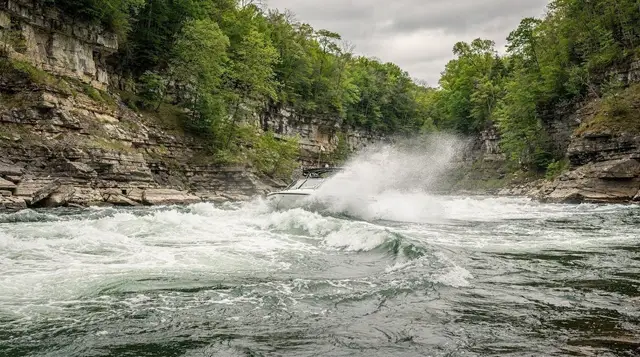
Search for Queenston and you will find pages about a hilltop war memorial mixed in with pages about a quiet riverside street. They are not the same place, and the confusion trips up a lot of visitors who show up at one expecting the other. Queenston, the village, sits at the bottom of the escarpment, right on the bank of the Niagara River, where the water has already dropped through the gorge and settled into a wide, calm stretch heading for Niagara-on-the-Lake and Lake Ontario.
Queenston Heights is the plateau directly above it, reached by a short but genuinely steep climb, where a battlefield park and a war memorial mark the events of October 1812. That story — the battle, the monument, the general who died taking the hill — belongs on the Heights page. This page stays down at the water.
The two places are close enough that most itineraries treat them as one stop, and that is reasonable: you can walk between them, or drive the switchback road that connects Queenston’s main street to the park above in a few minutes. But knowing which is which before you arrive saves a wasted trip. If you are here for the war memorial and the sweeping view over the gorge, you want the Heights. If you are here for a small brick village, a river you can walk right up to, and the house where Laura Secord lived, you are in the right place already.
A hamlet that predates the tourist strip
Queenston is old by Niagara standards — older than the resort district around the falls, which grew up around Victorian-era tourism a generation or two later. It was a working river landing and portage point before any of that, the place where goods were hauled around the unnavigable stretch of the Niagara Gorge on their way between Lake Ontario and Lake Erie.
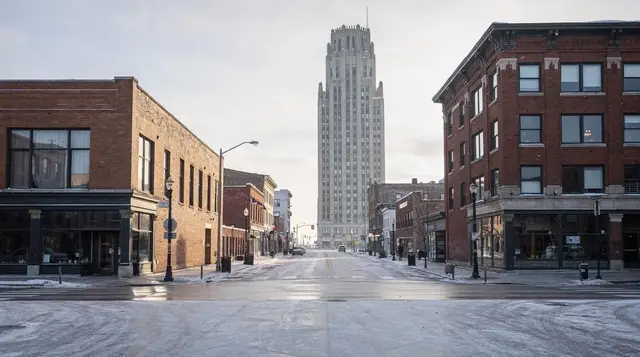
That practical, unglamorous history is still legible in the village’s shape: a small grid of streets set close to the water, modest brick and clapboard houses from the nineteenth century, a scale that has nothing to do with hotel towers or theme-park attractions. There is no Clifton Hill here, no illuminated wheel, no casino glow. It is quiet enough that the loudest thing most afternoons is the wind off the river.
That quiet is the point. After a day dodging crowds at Table Rock or queuing for Journey Behind the Falls, Queenston is a deliberate change of pace — a few streets to wander, a house to visit, a place to sit by the water before continuing on toward the vineyards or back to the falls.
Laura Secord’s house
The single most-visited building in the village is the restored home of Laura Secord, the Loyalist settler who, in June 1813, walked roughly 30 kilometres through American-occupied territory to warn British and Indigenous forces of an impending attack — a walk that helped set up the British victory at the Battle of Beaver Dams. Her house in Queenston has been restored to its early nineteenth-century appearance and is open to visitors as a small heritage site, with costumed interpretation and rooms furnished as they would have been in her day. It is a modest home, not a grand one, which is part of what makes it an honest stop rather than a staged one: this is what a prosperous-enough Niagara household actually looked like two centuries ago.
The house anchors a short, walkable historic core. A handful of other early buildings survive nearby, and the whole village can be covered on foot in well under an hour, longer if you stop to read the plaques or sit by the river. There is no need to rush it, and no need to allow a full day for it either — an hour or two is enough unless you are combining the stop with a longer visit to Fort George or the Queenston Heights park above.
Getting to Queenston
Queenston sits directly on the Niagara Parkway, the scenic river road that runs between Niagara-on-the-Lake and the falls. From the falls, it is roughly 13 kilometres and about 20 minutes by car, following the parkway north along the river rather than cutting inland on the QEW. From Niagara-on-the-Lake, it is closer still — about 12 kilometres, a comfortable 15-minute drive or a manageable cycle on the Niagara River Recreation Trail, which runs the entire length of the parkway.
There is no dedicated transit line to Queenston. WEGO, the tourist bus network that serves Niagara Falls Ontario, does not extend this far up the parkway, so a car, bicycle, or an organized tour is the practical way in. That makes Queenston a natural stop on a self-driven Niagara Parkway itinerary or on a guided day tour that already covers the falls and the wine region, rather than a stand-alone destination reached on its own.
For visitors basing themselves in Toronto and working the falls into a single day, a private tour from Toronto that pairs a boat ride with time along the river can be routed to include a stop in this stretch of the parkway, though most standard bus tours stick to the falls themselves and skip the villages along the river entirely — worth asking about before you book if Queenston matters to your day.
The Queenston-Lewiston Bridge: the quiet way into New York
Queenston’s other role, beyond history and scenery, is practical: it sits right next to one of the four vehicle and pedestrian crossings between Ontario and New York State, the Queenston-Lewiston Bridge. Of the four, it is consistently the least congested. The Rainbow Bridge down at the falls carries the heaviest foot and car traffic because it is the closest crossing to the main tourist district; the Whirlpool Rapids Bridge is restricted to NEXUS card holders only; and the Peace Bridge, well to the south near Buffalo and Fort Erie, serves a different corridor entirely.
The Queenston-Lewiston Bridge, by contrast, sits above the gorge in a quieter stretch of river and is generally the fastest option for anyone driving between this part of Ontario and Lewiston, Buffalo, or points further into western New York.
| Crossing | Location | Who can use it | Typical congestion |
|---|---|---|---|
| Rainbow Bridge | At the falls | Everyone, on foot or by car | Highest — long queues on summer weekends |
| Whirlpool Rapids Bridge | Mid-gorge | NEXUS card holders only | Fast, but restricted |
| Queenston-Lewiston Bridge | Queenston | Everyone, mostly vehicles | Lowest of the four |
| Peace Bridge | Near Buffalo/Fort Erie | Everyone | Moderate to high |
A few things do not change no matter which bridge you use. A passport is required in both directions — there is no exception for a short visit — and American citizens can substitute a passport card or an enhanced driver’s licence at a land crossing, with NEXUS speeding things up further for enrolled travellers. Visa-exempt travellers need an ESTA to enter the United States; Canada’s electronic travel authorization, the AVE/eTA, applies only to air travel and is not required at a land crossing like this one. ArriveCAN has not been required since October 2022, and rental cars only cross the border if the rental agreement specifically allows it, which is worth confirming before you drive up expecting to continue into New York.
Because the Queenston-Lewiston Bridge tends to move faster than the crossings closer to the falls, some drivers deliberately route their border crossing through here even when their actual destination is further south, adding the short drive down the American side rather than sitting in a Rainbow Bridge queue on a busy day. It is a reasonable trade if you have the extra 15 or 20 minutes to spare and want to skip a long wait.
Climbing to the Heights
From the village, the road up to Queenston Heights climbs the escarpment in a series of tight bends, gaining height quickly enough that the view opens up within a couple of minutes. It is a short drive, or a walkable but genuinely steep climb on foot if you are up for it.
At the top, the story shifts from Laura Secord’s walk to warn British forces to the battle that followed weeks later, and to the memorial that commemorates it — territory this page leaves to its neighbour. What is worth knowing from down here is simply that the two are connected by a five-minute drive or a stiff walk, and that most visitors reasonably do both in the same outing: the human story at the bottom, the battlefield and the view at the top.
Wine country at the door
Queenston sits at the northern edge of the Niagara wine region, close enough that several wineries in the Niagara-on-the-Lake sub-appellations are a short drive away. This page is not the place for winery-by-winery detail — that belongs on the wine route guide and the dedicated pages for Niagara-on-the-Lake’s wineries — but it is worth knowing that Queenston makes a sensible base or waypoint for a wine-country loop that also takes in the village’s own historic core. Drivers should plan on a designated driver or a tour with one built in; nobody should be tasting and then continuing along the parkway behind the wheel.
Where to eat and where this fits in a longer day
Queenston itself has only a handful of places to eat, closer to a village general store and a small café than a restaurant district — do not expect the range of options you would find in Niagara-on-the-Lake or on Clifton Hill. Most visitors treat Queenston as a stop rather than a meal destination, saving lunch or dinner for Niagara-on-the-Lake’s Queen Street a short drive north, or for one of the wineries along the route that serve food alongside tastings.
That makes Queenston most useful as one stop in a longer day rather than a full day on its own. A typical pairing looks like: the falls in the morning, lunch and a wander in Queenston or a nearby winery around midday, the climb to Queenston Heights for the view and the history, and on to Niagara-on-the-Lake for the evening. Travellers assembling their own route can build this out using the day trip to Niagara-on-the-Lake and wine country guide, or read through both sides in 48 hours if the plan also includes crossing to Lewiston and the American side via the bridge right here.
Visitors working from the falls without their own transportation sometimes find it easier to book a structured option that already threads these stops together. A day tour from Toronto that combines the falls, Skylon Tower and a boat ride covers the headline attractions well but typically does not detour up the parkway to Queenston — read the itinerary carefully if a stop here matters to you, since most bus tours are built around the falls and skip the smaller river villages entirely.
Planning a stop here
Because Queenston is small, the planning question is really about how it fits into a bigger day rather than how to fill a day on its own. An hour is enough to walk the village core and visit Laura Secord’s house if you keep it brief; two hours lets you add a slower coffee stop and a short walk along the river before heading up to the Heights or on to wine country. Treat it as a waypoint on the Niagara Parkway rather than a destination that needs its own dedicated visit, and it earns its place easily.
Travellers coming from further afield, including those doing a single big loop from Toronto, sometimes fold Queenston into a guided outing rather than driving themselves. A guided tour of the falls that includes hotel pickup and a boat ride is a common way to see the main attractions without a rental car, though as with the other tour options above, confirm whether the itinerary actually reaches this far up the parkway before assuming Queenston is included.
Queenston, Ontario: frequently asked questions
Is Queenston the same place as Queenston Heights?
No. Queenston is a small village at the foot of the escarpment, right on the Niagara River. Queenston Heights is the plateau directly above it, reached by a short, steep climb, and is where the War of 1812 battlefield and memorial are located. They share a name and sit only minutes apart, but they are two distinct stops.
How do I get from Niagara Falls to Queenston?
Queenston is about 13 kilometres from Niagara Falls, Ontario, roughly a 20-minute drive along the Niagara Parkway. There is no dedicated WEGO bus service this far up the parkway, so driving, cycling the riverside trail, or joining a tour that routes through the area are the practical options.
Can I cross into the United States at Queenston?
Yes. The Queenston-Lewiston Bridge sits right beside the village and crosses into Lewiston, New York. Of the four bridges linking Ontario and New York State, it is generally the least congested, making it a popular choice for drivers who want to avoid the queues at the Rainbow Bridge near the falls.
Do I need a passport to cross the Queenston-Lewiston Bridge?
Yes, in both directions, with no exception for a short visit. American citizens can also use a passport card or an enhanced driver’s licence at this land crossing, and NEXUS card holders move through faster. Visa-exempt travellers need an ESTA to enter the United States; Canada’s eTA applies only to air travel, not to a land crossing like this one.
What is there to do in Queenston itself?
The main draw is Laura Secord’s restored early nineteenth-century home, along with a short, walkable historic streetscape and a stretch of riverbank to sit by. It is a quiet stop rather than a full attraction, generally worth an hour or two rather than a full day.
Is Queenston worth stopping at on the way to Niagara-on-the-Lake?
For most travellers, yes, especially if you are already driving the Niagara Parkway or building a wine-country day. It adds relatively little time and pairs naturally with a climb to Queenston Heights, since the two are only a few minutes apart by road.
How long should I spend in Queenston?
Budget an hour for a brief look at the village and Laura Secord’s house, or two hours if you want a slower pace with a coffee stop and a walk along the river. Most visitors treat it as one stop within a longer day rather than a destination in its own right.
Are there wineries right in Queenston?
Queenston sits at the edge of the Niagara-on-the-Lake wine sub-appellations, and several wineries are a short drive away, but the village itself is not a wine-tasting destination. Treat it as a historic waypoint on a wine-country route rather than a winery stop in itself, and always arrange a designated driver or a tour before any tasting.