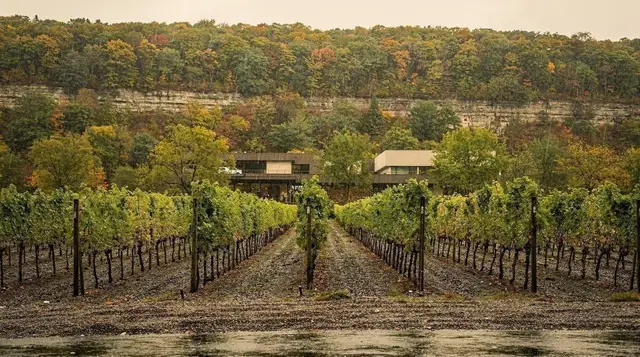
Most visitors who say they’re “doing the wine route” never actually see St. Davids by name — they drive through it on the way to somewhere with a sign out front. That’s roughly accurate. St. Davids is a bench of vineyard land, not a village built for tourists, and treating it like one is the fastest way to be disappointed by it.
Where St. Davids actually sits
St. Davids is a hamlet inland from Niagara-on-the-Lake, on the slope between the Niagara escarpment and the flatter land toward Queenston. It’s closer to Niagara-on-the-Lake than to the falls — a few minutes rather than the 20 to 25 it takes from Niagara Falls, Ontario — and it sits on the inland side of the Niagara Parkway rather than along the river itself. If you’ve already spent time on Queenston Heights or driven the Parkway toward Queenston, St. Davids is the turn you’d take up onto the bench rather than continuing along the water.
Geographically, this puts it in the same general wine district as Niagara-on-the-Lake’s other benches — Four Mile Creek, Niagara Lakeshore, Creek Shores — but on higher, better-drained ground, closer in character to the escarpment appellations around Beamsville Bench and Twenty Valley than to the flat, lake-moderated vineyards nearer the water. That elevation and drainage is the entire reason growers plant here, and it’s worth understanding before you start picking wineries off a map.
The soil, and why it matters more than the scenery
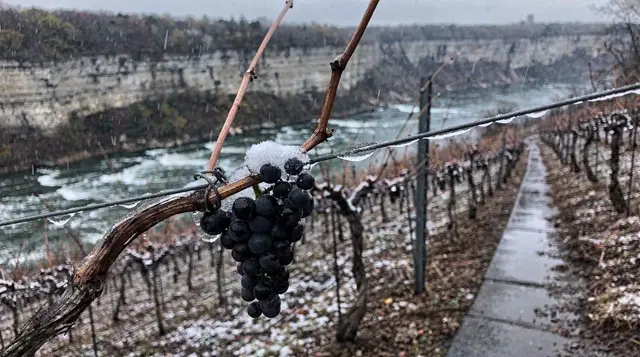
The St. Davids Bench sits on clay and limestone, a heavier, better-draining combination than the sandier soils closer to Lake Ontario. Vines here work harder for water, which growers on the bench will tell you produces more concentrated fruit — and it’s the reason the district has built its reputation on two grapes in particular: riesling, which responds well to the mineral content in the soil, and cabernet franc, which needs the extra heat retention and drainage to ripen properly this far north.
That’s the honest pitch for coming here rather than to any other Niagara sub-appellation: if you like a dry or off-dry riesling with real acid, or a cabernet franc with more structure than the region’s default merlot-blend reds, St. Davids Bench producers are where several of the flock go looking. Chardonnay and pinot noir appear on most lists too, following the broader pattern across the Niagara wine region, and a handful of estates hold back vidal for ice wine — a Niagara specialty explained in more detail in our ice wine guide.
Wineries worth planning around
St. Davids isn’t crowded with tasting rooms the way Niagara-on-the-Lake’s core roads are, and that’s part of its appeal — fewer stops, fewer crowds, more time with whoever’s pouring. Ravine Vineyard is one of the names most associated with the bench, known for cabernet franc and a farm-to-table restaurant that draws people who aren’t otherwise wine tourists. Konzelmann Estate Winery is another long-standing producer in the district, with a range that leans into riesling and ice wine alongside its reds. Beyond those two, expect a scattering of smaller, family-run cellars along the back roads — some with a proper tasting counter, others pouring from a folding table on a weekend.
We’re deliberately not pinning exact addresses or listing prices here: opening hours, tasting fees and even ownership shift from year to year on a bench this size, and a number copied into a guide is stale the moment a winery changes its pour list. Confirm hours and tasting costs directly with each winery, or let a driver-led tour (below) handle the logistics for you. For a wider view of who else is pouring nearby, our guides to Niagara-on-the-Lake’s wineries and the Twenty Valley and Beamsville Bench district cover the estates just outside St. Davids proper.
A hamlet, not a village — the trap to avoid
Here’s the piece that trips people up: St. Davids has no main street of shops, no cluster of cafés to wander between tastings, and no boutique row like Queen Street in Niagara-on-the-Lake or the compact strip through Jordan Village. It’s a residential hamlet — houses, a church, farmland, vineyard rows along quiet roads — and the wineries are spaced out along those roads rather than gathered around a square.
If you’re picturing an afternoon of strolling between wine shops and boutiques, that’s Niagara-on-the-Lake or Jordan Village, not St. Davids. Come here specifically for the wineries, plan your stops in advance, and don’t expect anywhere to grab a coffee between them beyond whatever the wineries themselves offer.
That also means St. Davids works best as an add-on rather than a destination in its own right. A morning in Niagara-on-the-Lake followed by an afternoon on the bench, or a stop on the way out to St. Catharines and the Welland Canal, makes more sense than driving out from the falls purely to see St. Davids.
Getting there and around
| From | Distance / time |
|---|---|
| Niagara Falls, Ontario | About 20–25 minutes by car (Niagara Parkway or Highway 405) |
| Niagara-on-the-Lake | About 10 minutes by car |
| Queenston | About 5–10 minutes by car |
| St. Catharines | About 15–20 minutes by car |
| Toronto | About 1 hour 45 minutes by car via the QEW |
A car is the practical way to see St. Davids — public transit doesn’t run through the hamlet, and the wineries are too spread out to walk between. If you don’t want to drive after tasting, a driver-led wine day is the standard workaround; see our guide to touring with a driver for how that typically works. Cyclists comfortable on rural shoulders can also work St. Davids into a longer ride — our cycling the wine route guide covers the roads that connect the bench to Niagara-on-the-Lake and the river trail.
If you’re coming specifically for wine and want the fuller regional picture — appellations, sub-regions, which grape goes where — that’s covered in our Niagara wine appellations and grapes guide and the broader wine and food itinerary, both of which treat St. Davids as one bench among several rather than the whole story.
Planning a half-day here
Two or three tastings is a realistic ceiling for an afternoon on the bench, especially if one stop includes lunch. Figure on CAD $10–25 per person per tasting flight where a fee applies (some rooms waive it with a bottle purchase), plus whatever a sit-down lunch adds if you stop at a winery restaurant. That puts a two-person afternoon — a couple of tastings and a meal — in the rough CAD $120–220 range referenced above; treat it as an order of magnitude, not a quote, since tasting fees and menus change by season and by producer.
Late September into October is the strongest window: harvest is underway, tasting rooms are fully staffed, and the vines themselves look their best. June is a reasonable alternative if you want a quieter room and don’t mind missing harvest activity. Winter tasting rooms generally stay open on reduced hours, and it’s the season to ask specifically about ice wine releases rather than assume a bottle will be on hand.
Pairing St. Davids with the rest of your day
Because St. Davids doesn’t fill a full day on its own, most visitors treat it as the back half of a longer plan. A common pattern: mornings in Niagara-on-the-Lake or at Queenston, afternoon tastings on the bench, then either dinner in town or a drive back toward the falls or St. Catharines. For a structured version of that combination, our day trip to Niagara-on-the-Lake and wine country walks through timing in more detail.
If your day extends toward the lakeshore rather than back to the falls, an evening on the water at Port Dalhousie is a pleasant way to close it out — an evening cruise on Lake Ontario with a bar on board runs out of the harbour a short drive from St. Catharines, and gives you a change of scenery from vineyard roads without adding much travel time. Some visitors prefer to make an evening of it with dinner included instead, in which case the dinner version of the same Port Dalhousie cruise covers the meal on the water.
For anyone splitting their trip between wine country and the falls themselves on different days, it’s worth booking the falls portion separately rather than trying to combine the two in a single afternoon — the boat rides, tower visits and border crossing eat more time than they look like on a map. A full falls day with a boat cruise included covers that side properly on its own day.
Travellers basing themselves in Toronto and adding both wine country and the falls to one trip often book a Toronto day tour that bundles the falls boat ride with the Skylon Tower for the falls leg, keeping the wine country afternoon as its own separate, unhurried outing.
How to read a tasting room on the bench
Tasting rooms here are small, and the person pouring is often someone who works the vines or the cellar. That is the real advantage over a busier strip: you can ask why a riesling tastes the way it does, which block the cabernet franc came from, or how the last harvest behaved, and get a specific answer rather than a script. Arrive with a rough idea of what you like — dry riesling, a structured red, something sweet to finish — and say so at the first pour. Staff will usually steer you toward the bottles that show the clay-limestone character best.
Pace yourself. Two or three stops is plenty, and a spit bucket is normal in any serious tasting room, not a rude gesture. Ask for water, eat something between stops, and decide before you leave the hotel who is driving. The bench roads are quiet but rural, and the shoulders are narrow, so this is not a place to improvise the ride home. If you are carrying bottles back across the border, read crossing the border at Niagara first so you know what to expect at the booth.
If you are staying on the American side
Many visitors base themselves in Niagara Falls, New York and treat the Ontario wine bench as a side trip. It works, but the border adds time that the map does not show. You need a passport in both directions, and the queue at the Rainbow Bridge can change the shape of your afternoon. Our guide to driving a rental car across the border covers the paperwork, and canada vs usa side of Niagara Falls helps you decide whether the Canadian side deserves a night of its own. Remember that prices on the Ontario side are in Canadian dollars, so a tasting fee is not quite what the same number would cost in US dollars.
If you would rather not drive at all, Niagara without a car shows what is realistic, and a booked driver is the cleaner answer for a wine afternoon. For a longer stay that mixes the falls, the river and the vineyards, the two days in Niagara Falls and weekend for two plans are good places to see where a half-day on the bench could slot in.
Fitting the bench into a wider Niagara trip
St. Davids sits close to several things worth combining with it. The Niagara Parkway is the scenic road that links the falls to Queenston and Niagara-on-the-Lake, and it is the natural way to arrive. Fort George and Queenston Heights give the day some history between tastings, and the Niagara River is never far from the road. If the weather turns, rainy day Niagara Falls has indoor ideas, though a cellar tasting is itself a decent wet-weather plan.
Seasons change what the bench offers. In autumn the harvest and the colour on the vines make it the best time; our fall in Niagara Falls guide shows what else is on at that time of year. In winter, many visitors come for ice wine, and the winter in Niagara Falls guide explains what is open and what is not. Before you build a plan around a particular room, check what’s open and closed by season, because smaller estates adjust their hours more than the big attractions do.
A simple order for the afternoon
A workable rhythm is a late morning start in town, a light lunch, then the first tasting around the middle of the afternoon. Keep the second stop short and the third optional. If a winery has a patio, ask whether you can sit with a glass rather than stand at the counter; the view over the rows is part of what you came for. Buy a bottle only if you would carry it home happily, and ask the staff how long it needs to rest. When the light starts to drop, head back along the Niagara Parkway or toward Port Dalhousie for the evening on the water mentioned above.
Who should skip it
Be honest about your own taste. If you want a lively strip, a long lunch in a village with shops, or a night out, go to Niagara-on-the-Lake instead; our guide on where to base, Niagara-on-the-Lake or the falls makes that choice easier. If your group includes young children who will not enjoy a quiet tasting room, the falls themselves, with the boats and the walkways, are a better use of the day. And if you are curious about beer or spirits rather than wine, Niagara breweries and distilleries is the better starting point. For everyone else, a calm afternoon among the vines is a good counterweight to the noise at the falls.
St. Davids won’t be the headline of anyone’s Niagara trip, and it isn’t trying to be. It’s a working wine bench with a couple of names worth seeking out, best treated as a quiet half-day addition to a Niagara-on-the-Lake or Queenston visit rather than a destination you drive out to see on its own.