Journey Behind the Falls: tickets and tips
What is Journey Behind the Falls and is it worth doing?
It's a Niagara Parks attraction on the Canadian side that takes you by elevator and two rock-cut tunnels to viewing portals behind Horseshoe Falls, then out to an open-air platform at its base. It's open year-round, though the lower platform closes in winter, and it's worth doing if you want to feel the falls rather than just look at them from Table Rock.
The one attraction that puts you inside the rock behind Horseshoe Falls
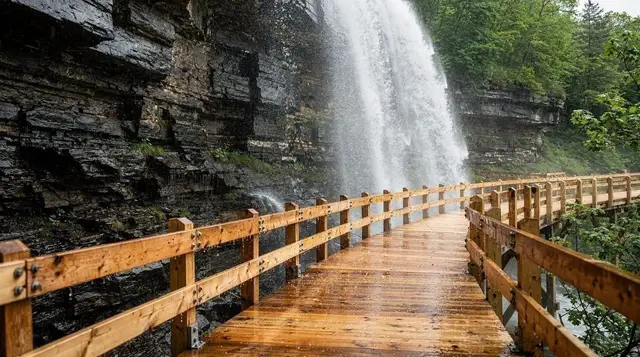
Everyone who stands at Table Rock looking at Horseshoe Falls eventually asks the same question: can you get closer than this? Journey Behind the Falls is the Niagara Parks answer, and it’s a genuinely different way to experience the falls rather than a gimmick with a good name. An elevator drops you roughly 38 metres through solid rock, two tunnels lead to viewing portals cut into the cliff face directly behind the sheet of water, and a doorway beyond them opens onto an outdoor platform at river level, close enough to feel the spray on your face and the vibration of the water under your feet.
It’s run entirely by Niagara Parks, the public body that also operates Table Rock, the White Water Walk and the Whirlpool Aero Car, so ticket revenue goes back into maintaining the parkland rather than into a private operator’s margin.
That matters here because Journey Behind the Falls sits right next to two attractions people frequently mix it up with: the Cave of the Winds on the American side, which puts you on wooden boardwalks beside the Bridal Veil Falls, and the newer Niagara Parks Power Station tunnel, which descends into a decommissioned hydro plant to a platform beside the river rather than behind the falls. All three are worth doing for different reasons, but they are not the same ticket and they don’t show you the same thing.
The elevator and the two tunnels
The entrance sits inside the Table Rock Welcome Centre, so you don’t need to go anywhere else on the site to reach it. After a short queue you’re handed a poncho — yellow, included in the ticket price, and worth actually wearing rather than carrying — and you take an elevator straight down through the rock. It’s a fast, unremarkable ride in itself; the interest starts once the doors open.
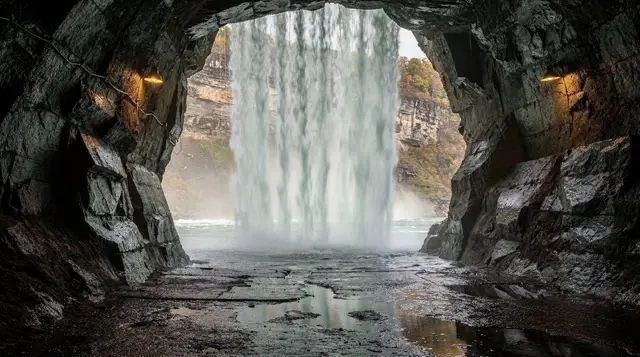
From there, two separate tunnels run out toward the cliff face. Each one ends at a portal, an opening carved through to the outside where you can see and hear the water passing just metres away. This is the point worth being honest about: you do not get a clear, face-on view of Horseshoe Falls from inside these tunnels. The portals frame a partial slice of the falling water, angled and usually softened by drifting mist, closer to looking through a window into a storm than standing in front of a postcard. If you want the wide, unobstructed view of the whole crest, that’s what Table Rock and the outdoor platform below are for — the tunnels give you proximity and sound, not a clean sightline.
That sound is worth preparing for too. Inside the rock, the roar of more than 168,000 cubic metres of water a minute passing overhead carries through the tunnel walls and amplifies at the portal openings. Combined with the mist blowing back in and the low light, first-time visitors often stop talking altogether for a moment. It’s not unpleasant, but it does catch people off guard, and it’s part of why the site is memorable rather than a straightforward waterfall photo op.
The outdoor platform at the base of Horseshoe Falls
Beyond the tunnels, a doorway leads out to an open-air observation platform at the base of the falls, at river level. This is where Journey Behind the Falls earns its reputation: you’re standing close to where the Horseshoe’s spray genuinely soaks visitors, with the cliff rising behind you and the curtain of water falling nearby. It’s as close to the base of the falls as anyone gets without being on a boat, and unlike the Niagara City Cruises boat, you’re on solid ground the whole time, which some visitors prefer.
The platform is also where the honesty matters most: it’s still not a face-on view of the full crest of Horseshoe Falls. You’re at the base, looking up and along the falling water rather than across at it. Photographers used to the classic wide shot from Table Rock or the Skylon Tower observation deck are sometimes surprised the platform gives a narrower, more vertical perspective. What it does deliver is scale and sensation — the noise, the spray, the sense of standing at the foot of something enormous — that the panoramic viewpoints don’t.
Open year-round, but the platform closes in winter
Journey Behind the Falls operates every day of the year, which sets it apart from several of the region’s other attractions that shut down for the cold months, including the White Water Walk and the Whirlpool Aero Car. The elevator and both tunnels run through the winter, so the indoor portion of the experience — the descent, the tunnels, the portals — stays open regardless of the season.
The outdoor platform is the exception. It typically closes for winter, generally from late autumn through spring, because ice buildup on the platform and railings makes it unsafe to keep open. The exact closing and reopening dates shift a little year to year depending on the weather, so if the outdoor platform is the part you most want to experience, it’s worth confirming current hours before you plan a winter trip around it. Visiting between late spring and mid-autumn is the only way to be reasonably sure the full experience, tunnels and platform together, is available.
Tickets, pricing and what’s actually included
A standard Journey Behind the Falls ticket includes the elevator ride, both tunnels, the outdoor platform when it’s open, and the poncho. Pricing sits in the same general range as the other individual Niagara Parks attractions — expect the ticket to land in the low-to-mid 30s in Canadian dollars for an adult in 2026, though the number moves from year to year and it’s worth checking current Niagara Parks pricing rather than treating any figure here as fixed.
The better value comparison is against the bundled passes. The Niagara Parks Adventure Pass Classic, priced at roughly 40 CAD for an adult for the 2026 season (valid April 20 to November 1, 2026), bundles Journey Behind the Falls together with the White Water Walk, the Butterfly Conservatory, two days of WEGO transit and two days of the Falls Incline Railway. If you’re planning to do more than one Niagara Parks attraction in a day, the math usually favours the pass over buying Journey Behind the Falls on its own — it’s worth reading through which Niagara Parks pass to buy and the fuller Adventure Pass Classic breakdown before deciding.
| Option | What it covers | Rough price (2026, CAD) |
|---|---|---|
| Journey Behind the Falls, standalone | Elevator, tunnels, platform, poncho | Low-to-mid 30s per adult |
| Adventure Pass Classic | Journey Behind the Falls + White Water Walk + Butterfly Conservatory + 2 days WEGO + 2 days Incline Railway | Around 40 |
| Combined boat and Journey Behind the Falls tours | Niagara City Cruises boat plus Journey Behind the Falls in one booking | Varies by operator and season |
Prices here are CAD throughout, since this is a Canadian-side attraction; don’t compare them directly to American-side USD pricing without converting first.
Booking ahead versus buying at Table Rock
Outside of peak season you can usually walk up to Table Rock and buy a same-day ticket without much trouble. That changes in July and August, on long weekends, and on evenings when the falls illumination or fireworks draw extra crowds — walk-up tickets can sell out, or the elevator queue alone can eat 30 to 60 minutes of your day. If your schedule is tight or you’re visiting in peak summer, booking ahead is worth it, and it costs the same either way; there’s no premium for pre-booking. The broader question of when to lock in tickets versus buying on arrival for this destination is covered in book ahead or buy on site.
For visitors who want to pair the tunnels with a boat trip on the same outing, several operators sell a combined ticket that covers both in one booking, which saves managing two separate queues at Table Rock and the boat dock. One option worth comparing is the Niagara Falls boat trip and Journey Behind the Falls combination ticket, which pairs the tunnels with a cruise toward the base of Horseshoe Falls. There’s also a version built specifically around a bundled Journey Behind the Falls and boat ride package for travellers who’d rather book both attractions once and skip re-queuing.
If you’re visiting after dark, the falls are lit every evening year-round, and an evening tour that pairs the illuminated falls with a Journey Behind the Falls visit is worth considering — the tunnels and platform themselves look the same regardless of the hour, but reaching them as part of an evening outing means less daytime queueing and a different view of Horseshoe Falls once you’re back outside.
How it compares to the other close-up experiences
Niagara’s Canadian and American sides both offer a version of “get close to the water,” and it’s easy to conflate them when planning. Journey Behind the Falls is specifically a Horseshoe Falls, Canadian-side, rock-tunnel experience. It is not the Cave of the Winds, which is an American-side boardwalk experience beside the Bridal Veil Falls with a completely different structure — wood decking in open air rather than tunnels through rock — and it’s covered on its own in the Cave of the Winds and Hurricane Deck guide.
It’s also not the Niagara Parks Power Station tunnel, a much newer attraction inside a former hydro plant that ends at a river-level platform rather than a portal behind the falls; that one has its own writeup too.
If your priority is a frontal, unobstructed photo of Horseshoe Falls, that’s free from Table Rock or the Skylon Tower observation deck, not from inside these tunnels. If your priority is being on the water itself, that’s the Niagara City Cruises boat. Journey Behind the Falls sits in a middle category: closer and louder than the viewpoints, drier and steadier underfoot than the boat, with a partial rather than panoramic view of the water as the trade-off.
Practical tips for a better visit
Wear shoes that can get wet — the poncho covers your body but not your feet, and the platform floor is usually damp even in dry weather. Bring a dry bag or a sealed pocket for your phone; people regularly ruin photos, and occasionally phones, by pulling them out at the portal without protection. If photography matters to you, know going in that the tunnel shots will be dim and misty and the platform shots will be close-range rather than wide — save the panoramic Horseshoe Falls photo for Table Rock beforehand or afterward.
Timing your visit earlier in the day, particularly on summer mornings, tends to mean a shorter elevator queue than midday or early afternoon. If you’re combining Journey Behind the Falls with other Table Rock-area attractions in a single day at the falls, doing the tunnels first thing avoids stacking your wait time on top of everyone else’s lunchtime crowd. And if you’re visiting outside the April-to-October window, confirm the outdoor platform’s status before you go, since what’s open and closed by season at Niagara shifts more than most first-time visitors expect.
Journey Behind the Falls: frequently asked questions
Can you see Horseshoe Falls from inside the tunnels?
Only partially. The portals cut into the rock face frame a slice of the sheet of water from behind and to the side, not a full frontal view, and spray usually mists the opening. The clear, wide view of Horseshoe Falls is from Table Rock or the outdoor platform, not from inside the tunnels themselves.
Is Journey Behind the Falls open in winter?
Yes, the elevator and both tunnels run all year. The lower outdoor platform at river level closes for winter, typically from late autumn to spring, because ice buildup makes it unsafe. In the off season you still reach the portals inside the rock, just not the platform beyond them.
Do they give you a poncho?
Yes, a plastic poncho is included with the ticket and handed out before you head down. You’ll still get wet in your face and around your shoes, especially near the portals and on the platform when it’s open, so wear shoes you don’t mind getting damp.
How long does the visit take?
Budget 30 to 45 minutes for the elevator, tunnels and platform themselves, plus queueing time that varies a lot by season. In July and August, especially midday, the wait for the elevator can add another 30 to 60 minutes on top of that.
Is Journey Behind the Falls the same as the Cave of the Winds?
No. The Cave of the Winds is on the American side and uses wooden boardwalks that put you within metres of the Bridal Veil Falls, a completely different structure and a different waterfall. Journey Behind the Falls uses tunnels cut into the rock on the Canadian side and looks at Horseshoe Falls. They’re often confused but they’re separate attractions on separate falls.
Is it the same as the Niagara Parks Power Station Tunnel?
No, and they sit close together, which adds to the confusion. The Power Station Tunnel is a newer attraction inside the decommissioned Rankine power plant, ending at a platform beside the river rather than behind the falls. Journey Behind the Falls is the older, separate ticket that takes you into the rock face behind Horseshoe Falls itself.
Is the noise really that loud inside the tunnels?
Loud enough that people often stop mid-sentence. The roar of the water carries through the rock and off the portal openings, and combined with the mist and the confined space, it catches first-time visitors off guard. It’s part of the experience, not a flaw in it.
Can you buy tickets on the spot, or should you book ahead?
You can generally buy on the spot at Table Rock outside peak periods, but in July and August, and on any sold-out illumination evening, walk-up tickets can run out or mean a long wait. Booking ahead removes that risk and doesn’t cost more.
Tunnels and decks behind the falls on GetYourGuide
Verified deep-linked GetYourGuide tours. Book through these links and we earn a small commission at no cost to you.
GetYourGuide does not provide a product photo for this activity — the image shows the meeting point, photographed by us.