Table Rock, Terrapin Point, and Luna Island: the three closest views compared
What's the closest viewpoint to Niagara Falls?
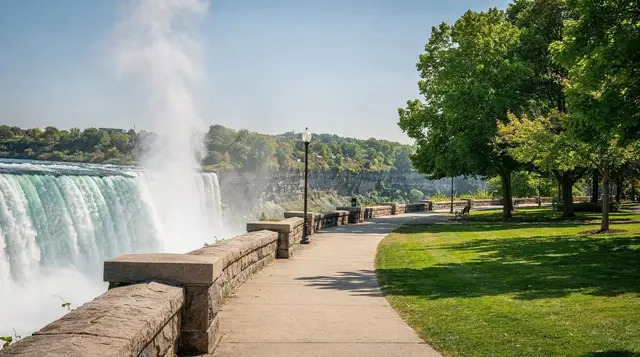
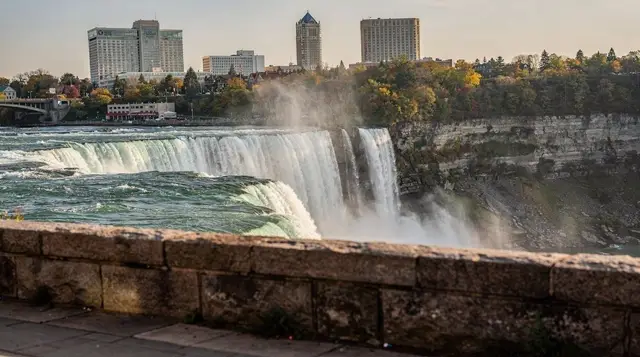
Table Rock, on the Canadian side, sits right at the edge of the Horseshoe Falls crest and is free to visit. Terrapin Point, on Goat Island in the US, gets just as close from the American side. Luna Island, a short walk past Terrapin Point, is the closest point to Bridal Veil Falls and American Falls.
Three viewpoints, two countries, one crest of water
Niagara Falls has three separate cascades, and the closest place to stand at each one depends on which bank of the river you’re on. This guide compares the three viewpoints that get you nearest the water without a boat ticket or an elevator ride: Table Rock on the Canadian side, Terrapin Point on the American side, and Luna Island, a small strip of land between the American Falls and Bridal Veil Falls. All three are free. None of them guarantees a rainbow — that’s a matter of sun angle and mist direction on the day, not which spot you pick — and anyone who promises you one is guessing.
Two of the three look at the same cascade from opposite banks. Table Rock and Terrapin Point both sit at the crest of the Horseshoe Falls, the biggest of the three cascades and the one carrying roughly 90% of the river’s flow. Luna Island is a different story entirely — it looks at American Falls and Bridal Veil Falls, the two smaller cascades on the US side, from a spot wedged between them.
Table Rock: the Canadian-side view, right at the crest
Table Rock is the closest a visitor can walk to the Horseshoe Falls without paying for anything. It’s a broad plaza at the edge of Queen Victoria Park, directly above the point where the water tips over — close enough that on a windy day the mist reaches the railing in a fine, cold spray. This is the postcard view: the full curve of the Horseshoe laid out in front of you, water disappearing over the crest and vanishing into its own cloud below.
The Table Rock Welcome Centre building sits right behind the viewing plaza, with washrooms, a gift shop, a sit-down restaurant with a falls-facing dining room, and the entrance to the Journey Behind the Falls attraction, which is a separate paid experience covered in its own guide — this page only deals with the free outdoor viewpoint above it. At night, the Horseshoe is lit by Niagara Parks’ LED illumination system, and Table Rock is the single best place to watch it change colour.
The tradeoff is crowding. Table Rock is the default stop for every tour bus, every Journey Behind the Falls visitor, and most first-time travellers on the Canadian side, so the railing fills up fast on a summer afternoon. Early morning, before 9 a.m., and after dark once the dinner crowds thin out are the two windows where you can actually get room to stand still and look. For a fuller rundown of free spots along the Canadian bank, see the guide to free viewpoints on the Canadian side.
Terrapin Point: the American-side view of the same falls
Terrapin Point is the American answer to Table Rock — the closest a visitor on the US side can get to the Horseshoe Falls crest. It sits on the outer edge of Goat Island, inside Niagara Falls State Park, and like Table Rock it costs nothing to visit; the park itself has never charged admission.
The angle here is different from Table Rock’s. Instead of looking across the curve of the Horseshoe, you’re standing almost on top of one edge of it, looking down and along the crest as the water disappears. It’s a more vertical, more dramatic sense of scale for some visitors, and a noticeably calmer one to visit — Terrapin Point pulls a fraction of Table Rock’s foot traffic, even in peak season, because most visitors arriving from Toronto never cross to the US side at all.
Reaching it means parking or walking onto Goat Island, which is connected to the mainland by a short bridge over the upper rapids. From the Goat Island paths, Terrapin Point is a flat, paved walk with no stairs. Mist here depends entirely on wind direction on the day — sometimes you’re dry, sometimes you’re not — so treat a rain jacket or the free poncho from a boat tour as standard kit rather than an afterthought. The guide to free viewpoints on the American side covers the rest of Goat Island’s outlooks in more detail.
Luna Island: small, close, and easier to reach than it sounds
Luna Island is the one visitors most often get wrong before they arrive. The name suggests something isolated — a boat ride, a bridge crossing, a separate destination. It isn’t. Luna Island is a narrow strip of land connected to Goat Island by a short, solid walkway over a thin channel of the rapids, and getting onto it takes less than a minute of walking from the main Goat Island path. It is not hard to reach, and it is not remote; it’s simply small enough, and just far enough off the main loop, that a lot of visitors skip it without meaning to.
What makes Luna Island worth the short detour is its position: it sits directly between American Falls and Bridal Veil Falls, separating the two. From its edge you get a close, slightly elevated look down into Bridal Veil Falls — the smallest and least visited of the three cascades — with American Falls filling the view to the other side. It’s a quieter, more intimate vantage point than either Table Rock or Terrapin Point, both because of the angle and because so few people make the walk.
The path can get slick with spray close to the rail, and Niagara Parks and New York State Parks both close sections of the outer islands during high water or heavy ice, so treat Luna Island as a seasonal bonus rather than a guaranteed stop between November and March. Combine it with a walk out to the Three Sisters Islands a little further upstream if you want to see the rapids that feed the falls from above.
Comparing the three viewpoints side by side
| Viewpoint | Side | What it faces | Cost | Crowd level |
|---|---|---|---|---|
| Table Rock | Canada | Horseshoe Falls, head-on | Free | Highest — the default Canadian-side stop |
| Terrapin Point | USA (Goat Island) | Horseshoe Falls, along the crest | Free | Moderate — a fraction of Table Rock’s traffic |
| Luna Island | USA (Goat Island) | American Falls and Bridal Veil Falls | Free | Low — most visitors miss it |
None of the three charges admission, and none of them requires booking ahead. What separates them is which cascade you want to face and how much company you’re willing to share the railing with.
Can you see all three in one visit?
Only if you’re crossing the border, since Table Rock is in Canada and the other two are in the US. It’s a realistic half-day plan rather than a five-minute add-on: walk Table Rock in the morning while the light and crowds are both manageable, then cross via the Rainbow Bridge on foot — it’s a short walk with a small toll, faster than driving across in summer traffic — and spend the afternoon working across Goat Island from Terrapin Point to Luna Island.
Build in passport and border time on both sides of that plan; it’s covered step by step in the one-day Niagara Falls itinerary and in the guide to ordering your day at the falls if you’re trying to fit this alongside boat tours or Journey Behind the Falls.
If you’re short on time and staying on one side, don’t force the crossing just for a second angle on the Horseshoe. Table Rock alone covers the Canadian-side highlight; Terrapin Point plus Luna Island together cover the American side well, since they’re a few minutes’ walk apart on the same island.
Photography at all three spots
Late afternoon light works best at Table Rock and Terrapin Point, since both face roughly northeast across the Horseshoe and catch warm, low sun later in the day; midday light tends to flatten the water. Luna Island, facing the smaller falls more directly, holds decent light for longer through the day. None of the three viewpoints can promise a rainbow — it needs direct sun hitting the mist at the right angle, which happens on some afternoons and not others — so plan around good light generally rather than chasing a specific effect.
Mist will fog a lens fast at all three spots, especially at Table Rock and Terrapin Point when the wind is blowing toward the railing; a microfibre cloth does more good here than any filter. More on timing and camera care in the guides to the best times to photograph the falls, shooting the illumination and fireworks, and what the mist actually does to a camera.
What the water is doing at each viewpoint
The three spots are not just three angles; they show you different parts of the same river. The Niagara River runs 58 km from Lake Erie to Lake Ontario and drops 99 m along the way, and most of that drop is packed into the last stretch above and below the falls. At Table Rock and Terrapin Point you are watching the Horseshoe Falls tip over a crest of roughly 670 m, with a drop of about 57 m. At Luna Island the crest in front of you is the much shorter edge of the American Falls, about 260 m wide, with the narrow Bridal Veil channel beside it.
The amount of water you see also changes with the season. Under the 1950 treaty, 2,832 m³/s must pass over the falls during daylight hours from 1 April to 31 October, and 1,416 m³/s the rest of the year, with the remainder going to the power stations. In practice that means the summer view is the full, thundering version, while a winter visit shows a calmer curtain of water with more ice building up along the rails and rocks. The background to all of this is in Niagara Falls explained and in the blog post on why the flow is a treaty, not nature.
Choosing by season and time of day
Each viewpoint has a time of year when it works best, and a time when it asks more of you.
- Spring and early summer: the most mist and the loudest water. Expect to get wet at Table Rock and Terrapin Point if the wind swings your way. Bring a waterproof layer and keep your phone in a zip bag.
- Late summer and early autumn: the best balance of comfort and views, and the crowds at Table Rock are at their thickest on warm afternoons. The fall guide explains what the season looks like around the falls.
- Winter: the spray freezes on railings and paths, the Goat Island walkways can be closed in places, and the views feel more austere. Check what is open and closed by season before you plan a Luna Island detour, and read about ice formations at the falls if you are visiting in the cold months.
Time of day matters as much as season. Early morning gives you the quietest railing at Table Rock. Evenings bring the lights: the illumination of the falls is best seen from the Canadian bank, and on summer nights the fireworks over the falls are another reason to stay at Table Rock after dark rather than rushing back to the hotel.
Practical details: footwear, weather, and what to carry
Surfaces around all three viewpoints are paved, but wet stone and spray make them slippery, so wear shoes with real grip rather than smooth-soled sandals. Because the mist drifts, a viewpoint can be dry one minute and wet the next; a light rain jacket weighs almost nothing and saves the afternoon. A small microfibre cloth for your lenses and glasses is the one accessory worth packing.
You will not need much cash for the viewpoints themselves, but bring your passport if there is any chance you will cross between Table Rock and Goat Island, since you need it in both directions. The border crossing guide explains what to expect, and the account of crossing the border on foot is a useful first-person look at how long it actually takes. If you are driving, the parking guide for the Canadian side and the one for the American side will save you time circling lots.
Families and visitors with limited mobility can use all three spots, though Table Rock gets the busiest and Luna Island’s walkway is the narrowest. More general advice is in the guides on Niagara Falls with kids and on accessibility and mobility at the falls.
Pairing the viewpoints with the rest of your day
None of the three viewpoints needs more than 20 to 40 minutes if you only want the view, so they fit easily around bigger activities. On the Canadian side, Table Rock sits next to Journey Behind the Falls and a short walk from the boats at Niagara City Cruises. On the American side, Terrapin Point and Luna Island sit on the same loop as the Cave of the Winds, and the Maid of the Mist landing is close by. If you are weighing the two boats, see Maid of the Mist versus Niagara City Cruises.
The full American-side route, including the order in which to take Goat Island’s stops, is laid out in the Goat Island and American side loop guide. On a shorter stay, the free things to do in a full day guide shows how to string free viewpoints like these together without paying for a single ticket.
Getting the most from each side without overpaying
You don’t need a tour to stand at any of these three points — they’re free, and a rental car, WEGO bus, or a walk from most Fallsview and Clifton Hill hotels gets you to Table Rock directly. But if you’re combining the viewpoint with a boat ride, the tower, or a border crossing you’d rather not plan yourself, a guided option can bundle the logistics. A guided walking tour with a local host is a low-cost way to hit Table Rock and the surrounding Canadian-side viewpoints with someone who already knows where the crowds thin out.
For a fuller day that pairs the view with the boat and the tower, a small-group tour combining the tower, Journey Behind the Falls, and a boat ride covers the Canadian side’s paid attractions around the free viewpoint in one booking. And if you want to see Table Rock lit up after dark on top of the daytime view, a day-and-night combo tour is built around exactly that contrast.
Whichever way you visit, treat these three spots as the baseline, not the whole itinerary. They’re the closest you can get to moving water without paying for a boat or an elevator, and a comparison of what each side offers overall — beyond just the viewpoints — is in the guide to choosing between the Canadian and American sides.
Viewpoints, towers and observation decks on GetYourGuide
Verified deep-linked GetYourGuide tours. Book through these links and we earn a small commission at no cost to you.
GetYourGuide does not provide a product photo for this activity — the image shows the meeting point, photographed by us.