Niagara Falls accessibility: what's flat and what isn't
What's actually wheelchair accessible at Niagara Falls?
Table Rock, Queen Victoria Park, the Niagara Falls State Park and the Prospect Point Observation Tower are flat and step-free on both sides. Journey Behind the Falls and the Niagara Parks Power Station Tunnel use elevators but lead to damp, sometimes slippery viewing areas. Cave of the Winds and the Niagara Glen involve stairs and are not accessible.
Flat, wet, or stairs: sorting the falls by terrain
Most Niagara Falls coverage talks about which side has the better view. That’s a separate question from which side, and which attraction, you can actually get to without stairs. The two aren’t the same list, and mixing them up is how someone ends up at the bottom of a metal staircase in the Niagara Glen with no way back up except the same staircase.
This guide sorts the major sites into three honest categories: genuinely flat and accessible, accessible by elevator but leading somewhere wet, and not accessible at all. None of this covers travelling with children — that’s its own guide. This one is about mobility, full stop, on both sides of the border.
The genuinely flat sites — no interpretation needed
Four places at Niagara Falls are flat, paved, and step-free from the parking area or transit stop to the viewpoint itself:
- Table Rock, right at the crest of the Horseshoe Falls on the Canadian side. Level pavement, accessible washrooms, and the closest view to the water you can get without paying for an attraction. It’s free.
- Queen Victoria Park, the gardens and promenade running along the crest between Table Rock and the Rainbow Bridge. Paved paths, benches, and multiple viewing points along the way.
- The Niagara Falls State Park promenade on the American side. This is the oldest state park in the United States, laid out by Frederick Law Olmsted in 1885, and its main paths along the crest and around Goat Island are flat and paved. Entry to the park itself is free.
- The Prospect Point Observation Tower, the only platform on either side that actually projects out over the gorge. It’s reached by a short, level approach from the state park promenade, with an elevator inside the tower itself.
If your time or energy is limited, these four cover both the Canadian view of the Horseshoe and the American view of the American Falls and Bridal Veil Falls without a single stair. For a rundown of what else is free on each side, see the guides to free viewpoints on the Canadian side and free viewpoints on the American side.
Elevators that lead somewhere wet
Two of the most-recommended attractions at Niagara Falls use elevators to solve the vertical problem — the falls drop tens of metres, after all — but what’s at the bottom isn’t dry.
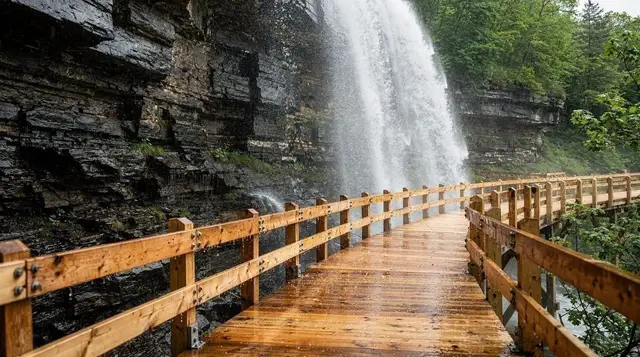
Journey Behind the Falls takes an elevator down through the rock to two tunnels that end at viewing portals behind the sheet of the Horseshoe Falls, plus an outdoor platform at its base when that section is open in season. The elevator and tunnels are step-free. The portals and the platform are genuinely wet: spray blows back into the openings, the floor can be slick, and a poncho (provided) does nothing for your wheels or your grip. Go in knowing the last stretch is a wet-weather situation regardless of what the sky is doing outside. Details on timing and what to expect are in the Journey Behind the Falls tickets and tips guide.
The Niagara Parks Power Station Tunnel works the same way structurally: an elevator drops about 55 metres, then a level tunnel runs some 670 metres to a platform at the river’s edge. The tunnel floor itself is dry and even, so this one is a better bet than Journey Behind the Falls if what you want is the elevator-to-water experience without the spray — the platform at the end sits beside the river rather than inside the falls. See the tunnel guide for how the visit is laid out.
The White Water Walk also starts with an elevator, about 70 metres down into the gorge, but the walkway that follows runs directly alongside class VI rapids. Spray reaches the walkway in windy conditions, and the elevator-to-walkway structure doesn’t change the fact that this is an attraction built to put you next to fast, loud water — not one designed around calm, dry footing. Treat it the same way as Journey Behind the Falls: accessible in mechanism, damp in practice.
Not accessible, and no elevator changes that
Two sites on the must-see lists involve stairs with no accessible alternative, and it’s worth saying so plainly rather than letting a website’s polished photos imply otherwise.
Cave of the Winds is the clearest case of a site that’s accessible in one form and not accessible in its main form, and confusing the two is the exact mistake worth avoiding. In its regular season, an elevator descends into the gorge, but the route to the Hurricane Deck — the platform a few metres from Bridal Veil Falls where visitors get soaked on purpose — is a network of wooden walkways with stairs. That part is not wheelchair accessible. Those walkways are dismantled every autumn and rebuilt every spring, so outside the main season they don’t exist at all.
In winter, the site reopens as the Ice Experience, and only the upper platform — reached without those stairs — is open. That upper platform is accessible. The rest of Cave of the Winds, in winter, simply isn’t operating. So the honest answer depends entirely on the season: don’t book Cave of the Winds for accessible use expecting the Hurricane Deck experience, and don’t assume winter access means the whole attraction is open — it means one platform is. More detail on the layout is in the Cave of the Winds and the Hurricane Deck guide.
The Niagara Glen Nature Reserve has one way in: a roughly 60-metre metal staircase cut into the escarpment. The Carolinian forest trails below are uneven, root-crossed dirt paths, and the climb back up the same staircase is the only way out. It’s a genuinely good hike for those who can manage stairs — free, quiet, and different from anything else at Niagara Falls — but there’s no accessible route to the reserve floor, and no way to fake one. See the gorge trails guide before committing to it.
The Whirlpool Aero Car boards from a small station on the Canadian riverbank reached by stairs, and neither the boarding area nor the cable car itself is built for mobility devices. If the Whirlpool is the draw, the flat viewpoints at Whirlpool State Park on the American side give a view down into the same basin without the cable car.
Pacing a day when distance matters
Flat doesn’t mean short. The promenade along the crest of the Horseshoe Falls and the paths around Goat Island add up, and a day that looks easy on a map can be a lot of wheeling or walking once you count the stretches between viewpoints. Build the day around a few anchor stops rather than a checklist, and leave gaps for rest, for food, and for the weather.
Spray is the variable people underestimate. Near the crest, and especially on windy days, mist drifts across the paths and rails and leaves pavement damp even when the sky is clear. That affects grip for wheels, canes and walkers alike, so shoes or tyres with good traction matter more than they seem to in the planning stage. A light waterproof layer and a way to keep a phone or a medical device dry are worth having on any day at the falls.
Crowds change the experience too. Viewing rails at Table Rock and along the American-side promenade fill up in summer, and a rail with a clear sightline is harder to reach from a seated position when people stand two deep. Going early, or choosing the quieter stretches of the park, gives you the same view with far less friction. If the forecast turns, the rainy day guide is useful for rethinking the order of the day without abandoning it.
Seasons and access
The terrain changes with the calendar. In the main season the open-air viewpoints are at their easiest, but they are also at their busiest. In winter, ice and snow can alter the footing along otherwise paved paths, and several attractions run reduced operations or close, as already noted for Cave of the Winds. Our winter guide describes what the cold months look like on the ground, and it is worth reading before you decide when to travel if smooth, dry pavement is a priority for you.
Whatever the season, check the operator’s own page the week you go. Elevator maintenance, platform closures and seasonal walkway changes are decided locally and can change after a guide like this one was written, so treat the lists here as a way to narrow your choices, not as a substitute for a phone call or an email to the attraction.
Questions worth asking before you book
A short list saves a lot of frustration on the day itself:
- Is the elevator in service on the day you plan to visit, and is there a second route if it isn’t?
- Can the operator take a wheelchair or mobility device on the vehicle, and how much notice do they need?
- Are accessible washrooms close to the viewpoint or attraction, or a long way from it?
- Is there somewhere to sit and rest near the end of the route?
- If part of an attraction is closed, is the ticket price adjusted, or can you rebook?
Asking these in writing, and keeping the reply, makes it easier to sort things out if the answer turns out to be different on arrival.
A quick side-by-side
| Site | Side | Getting there | Once you’re there |
|---|---|---|---|
| Table Rock | Canadian | Flat, paved | Flat, paved |
| Queen Victoria Park | Canadian | Flat, paved | Flat, paved |
| Niagara Falls State Park | American | Flat, paved | Flat, paved |
| Prospect Point Observation Tower | American | Flat approach | Elevator, dry |
| Journey Behind the Falls | Canadian | Elevator | Wet, can be slick |
| Power Station Tunnel | Canadian | Elevator | Dry, level tunnel |
| White Water Walk | Canadian | Elevator | Damp, spray in wind |
| Cave of the Winds (main season) | American | Stairs | Wooden walkways, stairs |
| Cave of the Winds (Ice Experience, winter) | American | Elevator/level | Upper platform only |
| Niagara Glen | Canadian | Stairs only | Uneven trail |
| Whirlpool Aero Car | Canadian | Stairs | Cable car, no ramp |
Buses, shuttles and the border
Both sides run public transit that includes accessible vehicles, but neither guarantees one will be the bus that shows up. WEGO links the Fallsview, Clifton Hill and Niagara Parkway zones on the Canadian side; the Niagara Falls State Park shuttle covers the American side. Confirm wheelchair or mobility-device access when you book or check the schedule rather than assuming it — this is one detail worth verifying directly with the operator instead of taking on faith.
Crossing the Rainbow Bridge on foot involves a short walk across a pedestrian lane with a toll booth at each end; there are no stairs on the bridge itself, but the approach paths and crossing distance are worth factoring into how much walking or wheeling a day already involves. If self-driving and managing your own pace matters more than saving money, a private vehicle removes both the transit-accessibility question and the border walk — see below.
Parking is the detail that trips people up most on the Canadian side. Accessible parking near Table Rock and Queen Victoria Park is limited and fills early, particularly on summer weekends and holiday Mondays. Arriving before mid-morning, or parking at a hotel with accessible spaces and using WEGO from there, is a more reliable plan than counting on a spot at the main lots. The parking on the Canadian side guide and its American-side counterpart go through the specific lots and their walking distances.
When a guided vehicle is the simpler answer
For a day that doesn’t depend on figuring out accessible transit schedules or hunting for a parking spot, a private vehicle handles the logistics instead of you. A private, customizable day tour from Toronto lets you set the pace and choose which stops matter — worth raising accessible-vehicle needs directly with the operator when you book rather than assuming it’s covered.
For a simpler, scheduled option covering the same route, a standard day tour from Toronto to Niagara Falls or a day trip departing from the Toronto area takes the driving and parking search off your plate, though the stops on a group itinerary are fixed rather than chosen around mobility needs — ask before booking.
If what you want instead is company and context on the flat, walkable stretch near the falls themselves rather than a vehicle, a guided walking tour with a local sticks to the paved viewpoints and can usually be asked to skip anything involving stairs.
Planning the rest of the day
Once the flat, elevator, and stairs-only sites are sorted, the rest of the planning is the same as anyone else’s: how to sequence the day, what’s open in which season, and whether to base on the Canadian or American side. The how to order your day at the falls guide lays out a sensible route between the accessible sites above, and the seasonal opening guide covers which attractions — accessible or not — actually operate in winter versus peak summer.
Between the two, it’s possible to build a full day around Table Rock, Queen Victoria Park, the Power Station Tunnel, the Niagara Falls State Park promenade and the Prospect Point Observation Tower without a single staircase, and without pretending an attraction is accessible when only half of it is.
Trip-planning essentials on GetYourGuide
Verified deep-linked GetYourGuide tours. Book through these links and we earn a small commission at no cost to you.
GetYourGuide does not provide a product photo for this activity — the image shows the meeting point, photographed by us.