What the mist does to your camera at Niagara Falls
Will the mist at Niagara Falls damage my camera?
It can. The spray is fine water droplets, not a light mist, and it settles on a lens or a phone screen within seconds at close viewpoints. A microfibre cloth, a waterproof cover or a simple plastic bag with a hole for the lens, and keeping electronics in a dry pocket between shots are the practical fixes.
The spray is not a metaphor
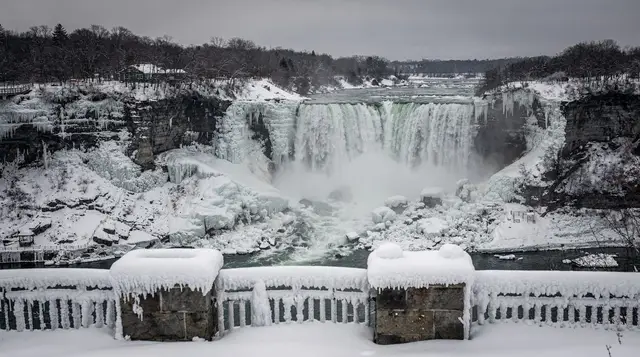
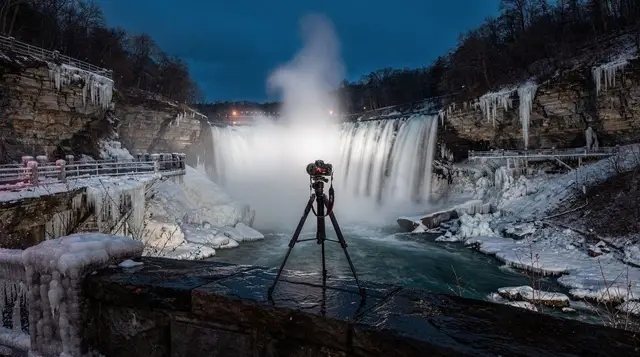
People read “mist” in a brochure and picture something soft and photogenic, the kind of thing that shows up as a nice haze in the background of a photo. What actually comes off Niagara Falls at close range is fine, wind-driven water droplets, produced by more than 168,000 cubic metres of water hitting the base of the falls every minute. At Table Rock, on Terrapin Point, or on the Hurricane Deck at Cave of the Winds, that spray does not drift past occasionally. It falls on you, and on your gear, more or less continuously, and the wind direction decides how much of it lands on the side of your body holding a phone or a camera.
This page is not about when or where to get the best photo — best times to photograph the falls and free viewpoints on the Canadian side cover that. This page is about what happens to your equipment once you are standing in that spray, and the specific, unglamorous things that keep it working.
How fast a lens actually fogs up
At the closest viewpoints, a dry lens can pick up visible droplets in under thirty seconds. It is not gradual. You raise the camera, get one or two clean frames, and by the third or fourth shot there is a soft blur creeping in from one edge of the image, or a scatter of small bright dots where droplets are catching the light. On an overcast day the effect is subtle enough that you might not notice it on a small phone screen until you look at the photos later, at full size, and see that half of them are unusable.
Phones are worse for this than dedicated cameras in one specific way: the front-facing camera and the main lens cluster sit flush with a flat glass back, and a single drop lands directly across the frame with nothing to deflect it. A dedicated camera with a lens hood at least gives a droplet something to land on before it reaches the front element, which buys you a few extra seconds per wipe.
Where the spray is worst, and where it eases off
This is a practical detail worth stating plainly, because it is easy to assume all viewpoints are equally exposed. They are not.
| Location | Spray level | Why |
|---|---|---|
| Table Rock | Heavy | Sits right at the crest of the Horseshoe, close to the plunge |
| Terrapin Point | Heavy | Closest American-side approach to the Horseshoe |
| Hurricane Deck, Cave of the Winds | Very heavy | A few metres from Bridal Veil Falls, by design |
| Lower platform, Journey Behind the Falls | Heavy | At river level, at the base of the Horseshoe |
| Boat decks, Maid of the Mist / Niagara City Cruises | Heavy, on approach | Boats motor in close to the base of the Horseshoe |
| Skylon Tower observation deck | Minimal | Elevated and set well back from the falls |
| Prospect Point Observation Tower | Light to moderate | Closer than the Skylon, but the tower itself keeps you above most of the spray |
The pattern is straightforward: anything that puts you at river level and close to the base of a falls will soak a lens fast. Anything elevated or set back, like the Skylon Tower or the observation tower on the American side, is comparatively gentle on equipment, even though the view is more distant.
The poncho protects you, not the camera
Every boat tour hands out a poncho, red for Niagara City Cruises, blue for Maid of the Mist, and it is genuinely effective at keeping your clothes and torso dry through the boat’s approach to the base of the Horseshoe. What it does nothing for is whatever you are holding. Your hands, and the camera or phone in them, are outside the poncho’s coverage by design, because you need your hands free and visible to operate the device. This is worth saying clearly because it is easy to assume the poncho is a general rain-protection measure. It is not. It solves one problem and leaves the equipment problem entirely to you.
The same logic applies at Journey Behind the Falls: the poncho provided at the entrance covers your body on the lower outdoor platform, but a camera pulled out for a shot is exposed the moment it leaves a pocket or bag.
What actually protects a camera
None of this requires expensive gear. The solutions that work at Niagara Falls are the same ones that work in any sustained outdoor spray, and most of them cost very little.
A microfibre cloth, more than one. This is the single most useful item, and the cheapest. Keep at least two dry, because a wet cloth smears water instead of removing it. Wipe the lens immediately before each shot, not after you notice it is blurry. At heavy-spray viewpoints, that can mean wiping between almost every frame.
A rain cover, or a plastic bag with a hole cut for the lens. A dedicated camera rain cover, sold cheaply online or at outdoor stores, seals around the lens hood with a drawstring and lets you keep shooting through an eyepiece or a screen without exposing the body of the camera. A sandwich bag or a larger freezer bag does close to the same job: cut or poke a hole slightly smaller than the lens diameter, stretch the bag over the camera body, and secure the opening around the lens barrel or hood with a rubber band. It is not elegant, but it works, and it means you are not carrying anything that has to be pre-purchased or specially sized.
A sealed pouch for a phone between shots. The habit that saves phones is not a case, it is timing: take the phone out, get the shot in under fifteen or twenty seconds, and put it straight back into a zip-top bag or a jacket pocket rather than holding it out in the open air while you decide on a second angle. Most phone damage at the falls comes from people who keep the device out continuously rather than in short exposures.
A dry bag for camera bodies and lenses not currently in use. If you are carrying a second lens, a spare battery, or a camera you are not actively shooting with, it belongs in a dry bag or at minimum a zipped compartment, not swinging loose on a strap where it collects spray even when you are not using it.
Time between the tunnel and the lower platform at Journey Behind the Falls. Many visitors shoot from just inside the tunnel opening rather than stepping fully onto the outdoor platform, which cuts spray exposure substantially while still getting a clear view of the Horseshoe from behind. It is a reasonable compromise if you are carrying gear you do not want to risk on the platform itself.
A realistic routine, not a checklist you will forget
The gear above only helps if it is actually within reach when you need it, which at a viewpoint with a two-second window before the next droplet lands means it has to already be in your hand or an easily reached pocket, not at the bottom of a bag.
A workable routine looks like this: keep the camera in its rain cover or bag whenever you are walking between shots, not just when you anticipate spray. Pull it out, dry the lens with the cloth you have kept dry, take your shots quickly, cover it again. For a phone, the same logic in miniature: out of the pouch, shot, back in the pouch. It feels excessive the first few times and then becomes automatic, and it is the difference between coming home with usable photos and coming home with a phone that no longer charges reliably.
If you are planning a longer session specifically for photos — working through several viewpoints on both the Canadian and American sides in one outing — it is worth reading how to sequence the day so you are not rushing the gear-drying steps at each stop; see how to order your day at the falls for that.
If carrying your own equipment through the wettest spots feels like more trouble than it is worth, a guided walk built around photography can take some of that pressure off, since the operator knows which angles are shootable from drier ground. a guided photo walk that times its stops around the falls for you is one option, and the Skylon Tower visit that includes a keepsake photo is a low-spray alternative if you would rather not risk a good camera at all and let someone else handle the shot from the observation deck.
Cold weather adds a second problem
In winter, the same spray that soaks a lens in summer freezes on it instead, sometimes within a couple of minutes at the coldest viewpoints. A thin skin of ice on a lens barrel or a phone case is a nuisance you can usually brush off, but the bigger risk is condensation: moving a cold camera from outdoor air into a heated building, or a warm car, causes moisture to form on and inside the equipment as it warms up. That moisture is worse for electronics than the original spray. The fix is patience rather than gear: let a camera or phone acclimatize slowly inside a sealed bag before you open it up in a warm room, rather than pulling it straight out to check your shots.
Winter at the falls also closes several of the wettest viewpoints outright. The Maid of the Mist and Niagara City Cruises boats, the Hurricane Deck at Cave of the Winds, and the White Water Walk are seasonal and shut down through the coldest months, which incidentally removes several of the highest-risk spots for equipment from the itinerary entirely.
What not to bother with
You do not need a fully waterproof action camera housing or a dedicated underwater case unless you are planning to be genuinely submerged, which is not what happens here even on the wettest boat tours or platforms. A basic rain cover or a plastic bag, paired with a dry cloth and the habit of putting gear away between shots, covers the actual conditions at Niagara Falls. Spending on heavier waterproofing than the situation calls for is money better spent on the tours themselves.
Skip, too, any temptation to improvise with tape or adhesive directly on a lens or phone body to “seal” it — residue left behind causes more lasting damage than an occasional wipe-down ever would, and it rarely actually keeps water out in a sustained spray.
Frequently asked questions about mist and camera gear at Niagara Falls
Does the poncho they give you at the boat tours protect my camera too?
No. The poncho is cut for a person, not gear. It keeps your torso and arms dry but leaves your hands, and whatever is in them, fully exposed to the spray. Camera and phone protection is a separate problem you have to solve yourself.
Is a phone actually at risk, or is this overcautious?
Modern phones with an IP rating handle a light splash, but the spray at close viewpoints is sustained, not a splash, and it gets into charging ports and speaker grilles. Repeated soakings, especially in cold weather, are a real way to shorten a phone’s life.
Where is the mist worst?
Anywhere close to the base of a falls: Table Rock at the Horseshoe, Terrapin Point on Goat Island, the Hurricane Deck at Cave of the Winds, and the lower platform of Journey Behind the Falls. Higher, set-back viewpoints like the Skylon Tower or Prospect Point get far less spray.
Can I just wipe the lens and keep shooting?
Once, maybe twice. After that you are wiping water across the glass rather than off it, and a microfibre cloth that is already damp makes smearing worse, not better. Dry the cloth or switch to a second one, and give the lens a few seconds to shed water before the next shot.
What is the cheapest way to protect a DSLR or mirrorless camera in the mist?
A clear plastic bag with a rubber band or lens hood to seal it around the front element costs almost nothing and works. A dedicated rain cover is more comfortable to shoot with over a longer session, but the bag does the same job for an occasional stop.
Should I skip Journey Behind the Falls with my good camera?
Not necessarily, but plan for it. The lower platform outside the tunnels sits close to the base of the Horseshoe and the spray is heavy and constant. Many people shoot from just inside the tunnel opening instead, or leave the camera in a dry bag and shoot with a phone in a sealed pouch.
Do camera shops near the falls sell rain covers?
Some souvenir shops on Clifton Hill and near Niagara Falls State Park stock basic plastic covers, but selection and quality vary and prices run high for what they are. It is worth bringing your own cover or a few sandwich bags rather than counting on finding one locally.
Does cold weather change any of this?
Yes. In winter the same spray can freeze on a lens barrel or a phone case within minutes, and condensation forms when you bring cold gear into a warm building. Let equipment adjust to indoor temperature gradually, in a bag, rather than exposing a cold lens to warm humid air right away.
Photography tours on GetYourGuide
Verified deep-linked GetYourGuide tours. Book through these links and we earn a small commission at no cost to you.
GetYourGuide does not provide a product photo for this activity — the image shows the meeting point, photographed by us.