Maid of the Mist: What to Expect on the Boat Tour
What is the Maid of the Mist and what should I expect?
The Maid of the Mist is a boat tour that has sailed from the American side of Niagara Falls since 1846, departing a dock near Prospect Point and running up to the base of the American Falls and then the Horseshoe Falls. Riders get a free blue poncho and board one of two fully electric boats introduced in 2020. The season generally runs from April to November, and tickets typically cost in the USD 25 to 30 range for adults.
A boat with a two-century head start
The Maid of the Mist has been carrying passengers up to the base of Niagara Falls since 1846, which makes it older than the country’s national park system, older than the bridges that now cross the gorge, and older than almost anything else a visitor will do on either side of the border. The name has stayed attached to the operation through wooden hulls, steam power, diesel engines, and, as of 2020, a fully electric fleet.
This guide covers the current American-side version of the ride: what the dock looks like, what the boats are actually like, what it costs, and what can go wrong on a given day. It does not cover Niagara City Cruises, the equivalent boat that departs from the Canadian side under a different company name, or a side-by-side comparison of the two — both get their own pages, linked at the end.
Where you board and what the walk there looks like
The dock sits at river level, at the bottom of the gorge on the American side, inside Niagara Falls State Park. Most visitors reach it through the Prospect Point Observation Tower, where an elevator drops from the top of the gorge down to the boarding area. There is also a paved path down the slope for anyone who prefers to walk or wants to skip the elevator line, though it is a genuine descent, not a stroll, and the climb back up at the end of the visit is the part people underestimate.
Once at dock level, the queue moves through a covered area where staff hand out the ponchos, then out onto the pier itself. On a busy summer afternoon this stretch, not the boat ride, is usually where the time goes.
The blue poncho, and what actually gets wet
Every rider gets a free blue poncho before boarding — it is included in the ticket, not an upsell. The colour is deliberate: it is one of the ways staff can spot their own group in the crowd near the Horseshoe Falls, where visibility drops in heavy spray. The poncho covers clothing reasonably well, but it does not seal at the wrists, ankles, or hood opening, and standing near the Horseshoe in a stiff wind means water finds its way in regardless.
What the poncho does not protect: shoes, socks, and anything held in an open hand. Sandals and canvas shoes end the day soaked; phones and cameras held up for photos get spray on the lens within seconds near the Horseshoe. A dry bag, a waterproof phone case, or simply a pocket to tuck the phone away for the closest approach solves most of this. Hair gets wet no matter what.
The two electric boats: James V. Glynn and Nikola Tesla
Since 2020, the Maid of the Mist fleet on the American side has run on two fully electric vessels, the James V. Glynn and the Nikola Tesla. Each is about 27.5 metres long and can carry up to 600 passengers. Batteries recharge to 80 percent in about seven minutes, timed to happen during the boarding window at the dock, so the turnaround between sailings does not need a separate charging stop.
According to the operator, these were the first fully electric passenger vessels of their kind put into service in the United States — a specific, checkable claim about the vessels themselves, not a general statement about how green the ride is. The naming is a small piece of Niagara history in its own right: Nikola Tesla’s alternating-current system, built with George Westinghouse, is what made the region’s hydroelectric power — and by extension its industry — possible in the first place, and Tesla is honoured with a statue on nearby Goat Island.
Compared with the diesel boats they replaced, the electric vessels are markedly quieter at idle and underway, which changes the character of the ride more than most riders expect walking in expecting a loud engine.
What the ride itself covers
From the dock, the boat heads upriver past Goat Island toward the base of the American Falls and Bridal Veil Falls first, then continues into the basin in front of the Horseshoe Falls, where the boat holds position for a few minutes in the heaviest spray before turning back. The full time on the water is roughly 20 minutes; the entire visit, counting the elevator or walk down, the poncho line, and the walk back up, more commonly runs 45 minutes to an hour depending on how busy the dock is that day.
The approach to the Horseshoe is the loud, wet, disorienting part that people come for — engine and current noise, spray moving sideways in gusts, and a wall of falling water close enough that conversation stops. It is also, honestly, brief. Riders expecting a long lingering pass should recalibrate: the boat does not sit there for an extended period, and the return trip downriver is calmer and considerably drier.
Prices and what’s included
| Ticket type | Typical price (USD) | What’s included |
|---|---|---|
| Adult | 25 to 30 | Boat ride, poncho |
| Child (roughly ages 3 to 12) | 15 to 20 | Boat ride, poncho |
| Under 3 | Often free | Lap seating, poncho on request |
| Combined tours with add-ons (Cave of the Winds, guided walks) | 40 to 90+ | Varies by operator and inclusions |
These are ranges, not quotes — prices are set by the operator and change from season to season. Treat any specific number here as a starting point for budgeting, and confirm the current figure before travelling.
Season, hours, and when it’s suspended or cut short
The boats generally operate from April to November, in step with the broader boat-tour season on both sides of the river; see boat tour season and winter alternatives for what replaces it outside those months, and do the falls freeze for what actually happens to the water in winter. Exact opening and closing dates shift by a few weeks year to year depending on ice conditions in the gorge and the timing of spring cleanup.
Within season, sailings run roughly every 15 to 30 minutes during daylight hours, more frequently in midsummer. None of this is a guarantee. High wind, lightning, thick fog, or ice on the pier can suspend service for part of a day or cut a sailing short before it reaches the Horseshoe Falls; mechanical issues on a given vessel occasionally take a boat out of rotation. Anyone planning a trip around this one activity should build in a spare afternoon rather than treating a single booked slot as certain. Rebooking or refund policies for a cancelled or shortened sailing vary by how the ticket was purchased, so keep the confirmation and ask at the ticket window if a sailing is disrupted.
Booking: online ahead vs at the dock
On summer weekends, holidays, and any day with a cruise-ship-sized tour bus in the parking lot, the same-day line for tickets and boarding can run well over an hour. Booking ahead locks in a time slot and skips that first line, though the boarding queue at the dock itself is unavoidable either way.
A straightforward option that covers just the boat and skirts the ticket-window line is the Maid of the Mist boat and walking tour on the American side. For a broader look at the American side in one outing, the Maid of the Mist and Cave of the Winds combination pairs the boat with the walkways at Cave of the Winds on the same visit.
Travellers coming from further afield sometimes prefer a fully guided day, such as the premium American-side highlights tour that includes the Maid of the Mist ride, which bundles transport and a guide around the boat ticket.
Outside peak season, buying at the dock is usually fine and keeps things flexible if plans change. What booking ahead buys is certainty about the time, not a better ride — the boat itself is identical for every ticket type.
Getting there and parking
The dock is inside Niagara Falls State Park, reached via Prospect Point. Drivers should expect to park in one of the state park lots and walk in; see parking on the American side for what that actually costs and where the closer lots fill up first.
Visitors coming from the Canadian side on foot cross via the Rainbow Bridge — see crossing the border at Niagara for documents and wait times — and can reach Prospect Point in well under 15 minutes’ walk from the bridge. Those without a car entirely can read getting around with WEGO and the Incline Railway for how to combine transit on the Canadian side with a border crossing on foot.
Which side’s boat is right for you
The Maid of the Mist and its Canadian counterpart, Niagara City Cruises, cover almost the same stretch of river from opposite docks, and the honest comparison — routes, poncho colours, boarding logistics, and which one to pick if only doing one — lives in its own dedicated guide: Maid of the Mist vs. Niagara City Cruises. This page focuses on the American boat alone.
What to pack and practical tips
- Closed shoes, not sandals — the pier and the spray zone soak open footwear within minutes.
- A dry bag or sealed pocket for phones and wallets; the poncho does not cover hands.
- A change of socks in the car for anyone sensitive to wet feet for the rest of the day.
- Sunglasses come off automatically in heavy spray; a strap keeps them from going in the river.
- Arrive with time to spare in summer — the ticket and boarding lines, not the ride, are what eat an afternoon.
- Combine the visit with a walk around Goat Island or Terrapin Point before or after, both a short walk from the dock and both free.
- For a full day plan that fits this around other American-side stops, see one day at Niagara Falls.
Maid of the Mist — frequently asked questions
How much does the Maid of the Mist cost?
Adult tickets are typically in the USD 25 to 30 range, with lower prices for children, usually around ages 3 to 12. Prices are set by the operator and can change year to year, so treat any figure here as a range, not a quote.
Where does the Maid of the Mist depart from?
The dock sits at the base of the gorge on the American side, reached by an elevator inside the Prospect Point Observation Tower in Niagara Falls State Park. There is also a walking path down from Prospect Point for visitors who skip the elevator.
Do I get wet on the Maid of the Mist?
Yes, genuinely wet, especially near the Horseshoe Falls where the spray is heaviest. The boat provides a free blue poncho, but it covers clothing more than it keeps you dry underneath; open shoes and phones held in bare hands both regret the trip.
What months does the Maid of the Mist run?
The boats generally operate from April to November, weather and ice permitting. Exact opening and closing dates shift slightly from year to year, and the service does not run through the winter months.
Is the Maid of the Mist cancelled in bad weather?
It can be suspended or cut short for high wind, lightning, ice, or mechanical issues, and no operator guarantees departures in every condition. Tickets bought for a cancelled sailing are typically rebooked or refunded, but the ride itself is never a sure thing regardless of season.
Are the Maid of the Mist boats electric?
Since 2020, yes. The James V. Glynn and the Nikola Tesla are fully electric vessels, each about 27.5 metres long and able to carry up to 600 passengers, and they were the first fully electric passenger vessels of their kind put into service in the United States.
How long does the Maid of the Mist ride last?
The boat itself is on the water for roughly 20 minutes, though the full visit, including the elevator, poncho line, and walk back up, tends to run closer to 45 minutes to an hour depending on how busy the dock is.
Should I book the Maid of the Mist in advance?
Booking ahead is worth it on summer weekends and holiday periods, when same-day lines can run long. Outside peak season, walking up and buying on site is usually fine, though it removes the certainty of a set departure time.
Niagara Falls boat tours on GetYourGuide
Verified deep-linked GetYourGuide tours. Book through these links and we earn a small commission at no cost to you.
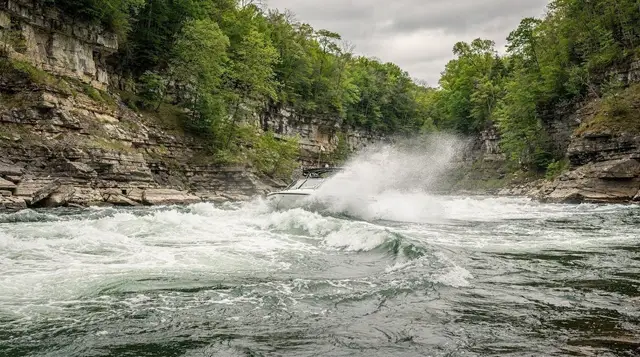
GetYourGuide does not provide a product photo for this activity — the image shows the meeting point, photographed by us.