Best times to photograph the falls
What's the best time of day to photograph Niagara Falls?
Morning light generally favours the American side, where Prospect Point and Terrapin Point look west across the river at a sunlit Horseshoe Falls. Late afternoon and golden hour generally favour the Canadian side, where Table Rock and the Skylon Tower face the Horseshoe with the sun behind you, lighting it from the front.
Niagara Falls is really three separate waterfalls facing in three not-quite-matching directions, split across an international border, so “what time should I show up” doesn’t have one answer. It has two, one for each side of the river, and they point at each other.
Why the side you’re standing on decides your light
The Horseshoe Falls curves in a wide arc on the Canadian side and, from the main viewing points, faces roughly west. That single fact drives almost everything below. Stand on the American side in the morning, at Prospect Point or Terrapin Point on Goat Island, and you’re looking west across the river at a Horseshoe that the rising sun is lighting from behind you.
Stand at Table Rock or up on the Skylon Tower in late afternoon, and you’re on the Canadian side looking at the same Horseshoe with the sun now behind you, lighting the falls from the front instead of skimming past the side.
That’s the whole trade: morning American-side views tend to have the sun working with you across the water, and afternoon Canadian-side views tend to have the sun at your back lighting the falls face-on. Midday, on either side, the sun sits close to overhead and does neither job particularly well — more on that below.
None of this is a promise about a specific day. Cloud cover, haze, and the angle of the sun relative to the calendar all shift things by weeks, not just hours. Treat this as which window to prioritize, not a guarantee of a particular photo.
Morning: the American side looks its best
Early in the day, head to the Niagara Falls State Park side. The two spots worth building a morning around:
- Prospect Point Observation Tower — the only platform that pushes out over the gorge itself, and the closest thing the American side has to a Table Rock equivalent. Morning sun crosses the river and lights the far bank and the top of the Horseshoe.
- Terrapin Point, at the end of Goat Island — the closest the American side gets to the Horseshoe, and the classic “edge of the world” shot looking down the crest line. Because you’re facing roughly west here too, morning light comes from behind or beside you rather than straight into the lens, which keeps contrast manageable.
Luna Island, the sliver of land between the American Falls and Bridal Veil Falls, is worth the short walk in the same window — it puts you close enough to both smaller falls to feel the spray without needing a boat ticket. For a fuller sense of what’s reachable on foot over here, the guide to free viewpoints on the American side and the walk-through of Table Rock, Terrapin Point, and Luna Island both lay out the order that wastes the least time.
American Falls and Bridal Veil Falls themselves don’t line up as neatly with the sun as the Horseshoe does — they face closer to north, tucked into their own stretch of gorge. Early morning still tends to give the softest, most even light on them before the sun climbs and the gorge walls start throwing hard shadows into the frame. It’s a reasonable trade-off: you won’t get the same front-lit drama on the American Falls that you can get on the Horseshoe from Canada, but you get calmer light and, in summer, far fewer people in the shot before the tour buses arrive.
One practical note: arrive close to opening if you want the crowd-free version of any of this. Niagara Falls State Park is the oldest state park in the country and it fills up fast on a clear summer morning — see the day-planning guide for a sense of how the rest of the day tends to unfold once the buses do arrive.
Afternoon and golden hour: the Canadian side takes over
By mid to late afternoon, the advantage flips. Cross to the Canadian side and the same sun that was working against a straight-on shot of the Horseshoe in the morning is now behind you, lighting it from the front.
- Table Rock, right at the crest of the Horseshoe — the single closest free viewpoint anywhere at the falls, and the reference shot most people picture when they picture Niagara at all. In the last couple of hours before sunset, the water, the mist, and the far bank all pick up warm light at the same time.
- The Skylon Tower, up at 160 metres, gives the elevated version of the same light: both the Horseshoe and the American Falls in one frame, with the whole gorge laid out below. It’s the shot that needs height to work, and it’s worth comparing against the American side’s own tower in the Skylon versus Prospect Point comparison before deciding which one earns your ticket money.
Queen Victoria Park, the stretch of gardens and pathway between Table Rock and Clifton Hill, gives you room to work different angles and distances along the same crest without paying for a second viewpoint — useful if the golden hour window is short and you want options without relocating. Table Rock and everything around it is free to visit; the guide to free viewpoints on the Canadian side covers the rest of what doesn’t cost anything.
Golden hour at Niagara is short, like anywhere, and the falls’ own mist can eat into it — a cloud of spray drifting across the sun at the wrong moment softens or kills the light for a few minutes at a time. Build in slack rather than planning around one perfect ten-minute window.
What to do with the middle of the day
Late morning through mid-afternoon, the sun sits high on both sides of the river, and high sun is the least flattering light Niagara has to offer: flat colour, hard shadows straight down into the gorge, and a glare off the water that neither side’s geography fixes. Rather than fighting it, most photographers use the middle of the day for things that don’t depend on sidelight:
- Wide shots that are about scale rather than colour — the full sweep of the Horseshoe Falls crest, or the Niagara River cutting through the gorge, work reasonably well in flat light because the subject is the size of the thing, not its glow.
- Black-and-white conversions, where the hard shadows that ruin a colour shot can add contrast instead.
- The parts of a Niagara visit that don’t depend on outdoor light at all — the tunnels and indoor platform of Journey Behind the Falls, or a boat ride where the subject is proximity and spray rather than a lit skyline.
If you’re building a single day around photography, the middle hours are also a sensible time to cross the border, eat, or move between viewpoints — the one-day itinerary has a version of that pacing built in.
The three falls aren’t interchangeable subjects
It’s worth separating “the falls” into what they actually are, because the light story is really about the Horseshoe specifically:
| Falls | Faces roughly | Best light window (general) | Shot from |
|---|---|---|---|
| Horseshoe Falls | West | Late afternoon / golden hour | Table Rock, Skylon Tower (Canadian side) |
| Horseshoe Falls | West | Morning, from across the river | Prospect Point, Terrapin Point (American side) |
| American Falls | North-ish | Softest early, harsher by midday | Prospect Point, Luna Island, Terrapin Point |
| Bridal Veil Falls | North-ish | Softest early | Luna Island, Cave of the Winds walkways |
The American Falls and Bridal Veil Falls sit close together and share a similar orientation, so if the light is working for one it’s usually working reasonably well for the other. The Three Sisters Islands, further up Goat Island in the rapids above the falls, are a different kind of subject entirely — fast water and rock rather than a waterfall face, and worth a stop on the same morning walk if you have the time.
Don’t plan around a rainbow
It’s tempting to read all of the above and assume a rainbow is just a matter of timing. It isn’t. A rainbow needs sunlight hitting the mist at the right angle and a clear enough sky for that sunlight to be strong and direct — cloud cover on an otherwise “correct” morning or afternoon kills it just as surely as being on the wrong side of the river. What’s true is that the same conditions that make for good falls photography — a sunny morning on the American side, a sunny late afternoon on the Canadian side, sun low enough in the sky to hit the spray at an angle — are also the conditions where a rainbow becomes more likely. More likely isn’t guaranteed. Show up for the light, and treat a rainbow as a bonus rather than the plan.
A practical two-side plan
If you have two days and photography is the priority, the simplest split is:
- Day one, morning: American side — Prospect Point, then Terrapin Point and Luna Island on Goat Island, working from the tower shot toward the crest-edge shot as the light gets better.
- Day one or two, midday: cross the border, eat, or do an indoor or boat-based attraction where the flat light doesn’t matter.
- Late afternoon into golden hour: Canadian side — Table Rock first for the closest angle, then up the Skylon Tower if you want the elevated version before the light fades.
Crossing the Rainbow Bridge on foot takes roughly ten minutes outside of peak lines, which makes a same-day double-side plan realistic in summer when the days are long enough to fit a morning session, a border crossing, and a golden-hour session without rushing either one. If you’d rather not manage the border crossing and viewpoint order yourself, a private guided day gives you the flexibility to chase a specific light window instead of a fixed group schedule:
a private, customizable day tour from Toronto that can be timed around morning or golden-hour light rather than a set departure slot.
For a lower-cost, fixed-schedule option that still gets you a full day at the falls from the Toronto area, there’s also a budget-friendly day tour to Niagara Falls departing from Brampton. If you’d rather cover the Niagara Parkway between viewpoints at your own pace, an e-bike lets you chase changing light along the river without relying on the WEGO schedule:
a guided e-bike tour along the Niagara Parkway.
And for a straightforward day trip out of Toronto with transport and a set itinerary handled for you, there’s a day tour to Niagara Falls from Toronto.
Choosing a lens and a frame for each window
The light is only half the decision; what you point at it matters as much. In the soft early hours on the American side, a wide lens suits the crest-edge shot at Terrapin Point, where the foreground rail, the rapids and the lip of the Horseshoe can all sit in one frame. A longer lens earns its place from the same spot by pulling the far Canadian bank and the mist column out of the crowd of detail around them.
In the golden-hour window on the Canadian side, the opposite habit tends to work: start wide at Table Rock to catch the full curve and the warm spray, then go tighter on the colour in the water as the sun drops. A single zoom that covers both ends saves swapping glass while the light is changing, which matters more than it sounds when you are standing in the spray.
Keep one eye on what is behind you as well. Because the sun is at your back on the Canadian side in the afternoon, your own shadow and those of the people beside you can creep into a wide frame near the rail. Step back from the barrier or shoot from a slightly raised spot if that happens.
Weather, crowds and the days that do not cooperate
A grey, overcast day is not a lost day. Even cloud gives soft, shadowless light that suits close-ups of the water and the texture of the mist, and it removes the glare off the river that makes midday so awkward. If the forecast is poor for the morning, move your plan rather than abandoning it: the rainy day guide lays out what still works when the sky is the problem.
Crowds shape the picture almost as much as the sun does. Early starts give you clear rails and an empty foreground on either side, and the late evening, once the day-trippers have left, often does the same. If you are visiting in the busiest weeks, the August crowds piece explains what to expect and when the platforms thin out.
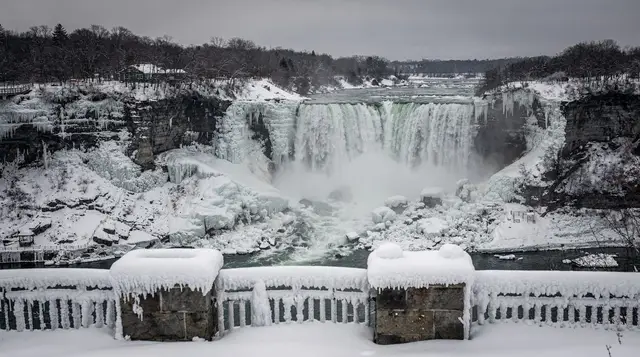
Winter changes the subject entirely, with ice building along the rails and the spray freezing on everything it touches. The sun sits lower for longer, so the warm light arrives earlier in the afternoon than in summer. The ice formations guide covers what to look for, and the winter guide covers what is open when you go.
Season changes the math too
Everything above assumes a clear-ish day and describes a general pattern, not a fixed clock time — the sun’s position at 8 a.m. in July is nowhere near where it is at 8 a.m. in November, so “morning” and “golden hour” both shift earlier or later through the year. The month-by-month weather guide and the broader best time to visit page cover which months bring clearer skies and less crowding, both of which matter as much as the hour once you’re standing at the rail with a camera.
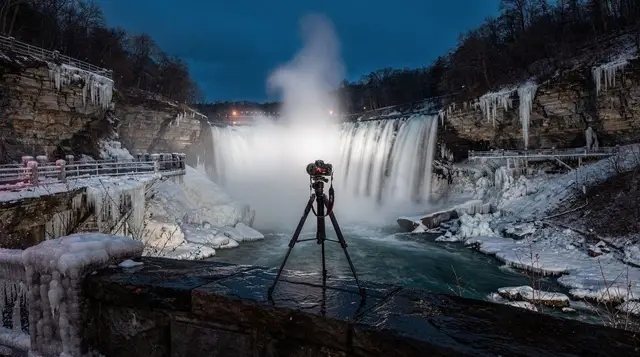
What’s outside the scope of this page: the falls lit up after dark, which run on their own nightly schedule and their own camera settings, and what the spray actually does to your gear once you’re close enough to feel it — both covered on their own pages linked above.
Photography tours on GetYourGuide
Verified deep-linked GetYourGuide tours. Book through these links and we earn a small commission at no cost to you.
GetYourGuide does not provide a product photo for this activity — the image shows the meeting point, photographed by us.