Free things to do at Niagara Falls: a full day, both sides
Can you spend a full day at Niagara Falls without paying for attractions?
Yes. Table Rock, Queen Victoria Park, the Niagara Parkway, the Niagara Glen, and the entire Niagara Falls State Park, including Prospect Point and Terrapin Point, cost nothing to enter. Parking is the one cost you cannot avoid on either side.
Niagara Falls is one of the few world-famous sights where the main event costs nothing to look at. You can spend a genuinely full day here, cross an international border, and walk away having paid for nothing but a sandwich, a bus fare, and parking, without ever buying a ticket to a single attraction. This is that day, laid out in order, on both sides of the river.
What “free” actually covers here
Every viewpoint in this guide is free to stand at. None of the boats, elevators, towers, or tunnels are, and this page deliberately skips those: Journey Behind the Falls, Maid of the Mist, the Skylon Tower, and Cave of the Winds all have their own pages, and if you want a mix of free and paid stops in one day, the Niagara Parks pass guide is where to compare them.
The one cost that survives every version of a “free” day is parking. Lots near Table Rock and Clifton Hill on the Canadian side, and near the Niagara Falls State Park entrances on the American side, are privately or municipally run and fill early on weekends. Treat parking as a real line in your budget, not an afterthought, and see the notes below before you drive in expecting to park free.
Morning: the Canadian side, on foot
Start on the Canadian side. It has the wide, straight-on view of the Horseshoe Falls, and everything worth seeing for free sits within a 20-minute walk.
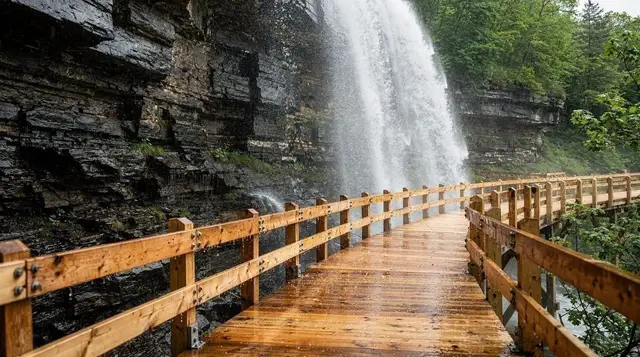
Table Rock Welcome Centre is the closest you can stand to the Horseshoe Falls without paying for anything, right at the crest where the water tips over. Arrive before 9 a.m. if you want the railing to yourself; by mid-morning it’s shoulder to shoulder, especially in summer. This is also where the paid Journey Behind the Falls and Niagara Parks Power Station tunnel both start, so it’s worth a slow pass even if you’re skipping them.
From Table Rock, walk north along Queen Victoria Park, the long landscaped strip that runs the length of the Canadian shoreline. This is the classic postcard walk: manicured gardens, the Horseshoe Falls on one side, the American and Bridal Veil Falls coming into view as you continue north toward the Rainbow Bridge. Give it 45 minutes to an hour if you’re stopping for photos, which you will be.
If you have a car and a bit more time, extend the morning onto the Niagara Parkway, the road and adjoining trail that follow the river for roughly 55 kilometres between Fort Erie and Niagara-on-the-Lake. You don’t need to drive the whole thing; even a short stretch north past Queen Victoria Park toward the Whirlpool takes you past river viewpoints most day-trippers never see, all free.
Midday: crossing to the American side
Around midday, walk across the Rainbow Bridge to the American side. It’s the closest crossing to the falls, open to pedestrians and cars, and the walk itself takes about ten minutes outside of peak times. You’ll need a passport in hand, not just packed away, and you should expect the crossing to take longer, sometimes over an hour by car, on summer weekends and holidays. On foot, it’s rarely a serious delay. The toll for walking across is a few dollars each way, not free, but it’s the cheapest way to see both countries’ views of the same waterfall in one day.
On the far side is the Niagara Falls State Park, the oldest state park in the United States, opened in 1885 and laid out by Frederick Law Olmsted, the same designer behind Central Park. Entry has been free since it opened, and it still is. Two stops inside it matter most for a free day:
Prospect Point is the only platform that juts out directly over the gorge, giving you a straight look down into the water and across at the American Falls. The paid elevator here takes you down to the Maid of the Mist dock, but the platform itself costs nothing.
Terrapin Point, out on Goat Island, is the closest free view of the Horseshoe Falls from the American side, arguably closer than anything on the Canadian side short of Table Rock. Goat Island also gives you access to Luna Island, wedged between the American and Bridal Veil Falls, and a short walk further upriver to the Three Sisters Islands, a quieter stretch of rapids most visitors skip entirely. Budget an hour and a half to two hours for Goat Island if you want to see all three without rushing.
Afternoon: the gorge, on both sides
The afternoon is for the river itself, not just the waterfall, and this is where the two sides genuinely differ rather than duplicate each other.
On the Canadian side, the Niagara Glen Nature Reserve is free and largely overlooked by visitors who never leave the falls. A metal staircase drops about 60 metres into a Carolinian forest scattered with glacial boulders, with roughly 4 kilometres of trails along the river below. The descent is easy; the climb back out is not, so this isn’t the stop for anyone who wants a flat, casual stroll. It’s the only real hiking on the Canadian side, and it’s a useful counterweight to a day otherwise spent on paved paths and railings.
On the American side, the Niagara Gorge Trail system does something similar but longer, running along the gorge past Whirlpool State Park and Devil’s Hole State Park. This is where you get a sense of the 11-kilometre gorge the falls have carved out over roughly 12,500 years, rather than just the waterfall at its head. Neither the Glen nor the Gorge Trail requires a booking or a ticket, and both are genuinely quiet compared to the crowds at Table Rock or Prospect Point, which is part of the appeal.
You won’t have time for both the Niagara Glen and the full Niagara Gorge Trail system in one day alongside everything else on this list. Pick whichever side you’re already based on, or split the difference and do a shorter section of one.
Going deeper on each side
If one stretch of the day appeals more than the rest, each side has its own free-viewpoint guide with more stops than this route can fit. The free viewpoints on the Canadian side covers the railings and lookouts along the promenade in more detail, and the free viewpoints on the American side does the same for the state park. Use them to swap a stop in or out rather than treating the table below as fixed.
The same logic applies to the gorge. The Glen and the Gorge Trail are both described briefly here, but the Niagara Gorge trails guide for the American side goes into the descent, the footing, and what to expect at the bottom. Read it before you commit to the afternoon, because it is the one part of this free day that asks something physical of you.
Eating without breaking the budget
A free day still involves lunch. Neither side makes this difficult, but a little planning keeps it cheap. Carry water and a few snacks in a small bag, since you will be walking for most of the day and the lines at food stalls near the viewpoints are longest exactly when you are hungriest. A picnic is the simplest answer: the lawns of Queen Victoria Park and the open ground inside Niagara Falls State Park are natural places to stop, sit, and eat with the falls in view.
If you would rather sit down, eat away from the railings. The streets a few minutes back from the main viewpoints are generally calmer and less tourist-priced than the strips right beside them. Plan the meal for the middle of the day, around the border crossing, so that you are never walking long distances on an empty stomach. The pace of a free day is slow by design, and a proper break in the middle makes the afternoon gorge walk far more pleasant.
When the weather turns
A free day is more exposed to the weather than one built around indoor attractions, so it helps to have a fallback. Mist from the falls blows across both promenades in any season, and on a windy day the railings at Table Rock and Prospect Point get properly wet. A light waterproof layer matters more than an umbrella, which is awkward in a crowd and useless in spray.
If the forecast looks poor, the rainy day guide lists what to do when the walking route stops being pleasant. Outside the summer months, check the seasonal opening guide before you set out, since a few services around the viewpoints run on reduced schedules while the viewpoints themselves stay open. Cold, clear days can in fact be the best of the year for this itinerary: the crowds thin out and the air is sharp, and you can usually stand at the railing for as long as you like.
Light, photographs, and staying late
Timing the day well also improves your photographs. The best light on the water changes through the day, and the best times to photograph the falls explains where to stand and when. If you have energy left after the gorge, staying into the evening costs nothing: the illumination of the falls lights the water in colour after dark and is visible from the free promenade, so the day can end on the same railing where it started.
The parking problem, honestly
This is the part most “free day” lists skip, and it’s the one piece of this itinerary that will cost you real money regardless of how careful you are.
On the Canadian side, lots near Table Rock, Clifton Hill, and the Fallsview area are run by the Niagara Parks Commission and by private operators, and prices climb the closer you get to the falls and the busier the day. Expect somewhere in the CAD 20-30 range for a full day close in, less if you’re willing to park further out and walk or take WEGO, the local bus network, the rest of the way.
On the American side, lots around the Niagara Falls State Park entrances are similarly metered or flat-rate, generally in a comparable USD range. There is no meaningful free street parking near either side’s main viewpoints during the day, and lots do fill by mid-morning on weekends and through the summer. For lot-by-lot detail, see the guides to parking on the Canadian side and parking on the American side.
If you’re doing this day without a car, GO Transit and VIA Rail connect Toronto to the Canadian side, and once you’re there, WEGO and your own feet cover everything on this list. That removes the parking cost from the Canadian half of the day, though you’ll still cross the border on foot and manage the American side independently. For a fuller breakdown of what a no-car day looks like end to end, see the guide on getting around without a car.
A suggested order for the day
| Time | Stop | Side | Cost |
|---|---|---|---|
| 8:30 - 9:30 a.m. | Table Rock Welcome Centre | Canadian | Free (parking extra) |
| 9:30 - 10:30 a.m. | Queen Victoria Park walk | Canadian | Free |
| 10:30 - 11:30 a.m. | Niagara Parkway (short stretch) | Canadian | Free |
| 11:30 a.m. - 12:00 p.m. | Cross the Rainbow Bridge | Border | Small toll on foot |
| 12:00 - 1:00 p.m. | Prospect Point, lunch nearby | American | Free (food extra) |
| 1:00 - 2:30 p.m. | Goat Island: Terrapin Point, Luna Island, Three Sisters | American | Free |
| 2:30 - 4:30 p.m. | Niagara Gorge Trail or cross back for the Niagara Glen | Either | Free |
This order front-loads the busiest viewpoints early, when lines and crowds are lightest, and saves the more physical stretch, the Glen or the Gorge Trail, for when you’re already warmed up. If you’d rather see a fuller version of this day mapped out with timing for meals and photo stops, the one-day itinerary covers the same ground with more detail on pacing.
Where paid attractions fit around this
Nothing here stops you from adding a paid stop or two once you’ve done the free version. Journey Behind the Falls and the Niagara Parks Power Station tunnel both sit right at Table Rock, so it’s easy to buy in on the spot if the free view alone isn’t enough. Maid of the Mist and Niagara City Cruises put you closer to the water than any viewpoint on land can, at a cost that’s worth weighing against what you’ll actually remember. The pass comparison guide breaks down which combination makes financial sense if you’re adding more than one paid stop.
If you’d rather have someone else handle the driving, the border crossing, and the route entirely, a guided day tour bundles the sightseeing with transport and sometimes a boat ride or lunch included. From the Toronto side, a full-day city and nature tour from Toronto covers the drive and the main viewpoints in one trip. Travellers already in New York can look at a full-day van tour from NYC, which is a long day on the road but removes the logistics entirely.
For a version that includes an evening fireworks display on the American side, this full-day USA tour with fireworks extends the free-viewpoint day into the evening. And if crossing the border yourself feels like the biggest hurdle, a full-day tour covering both the US and Canadian sides with lunch included handles the crossing for you, at the cost of trading the flexibility of doing it on your own schedule.
None of these are necessary for the day described above. They’re worth considering only if you’d rather trade some of the walking and border logistics for a fixed schedule and a driver.
Practical notes before you go
Bring a passport, not a photocopy, for the Rainbow Bridge crossing, and check the current border wait before you set out; the border crossing guide covers what documents work and what doesn’t. Wear shoes you don’t mind getting wet or dusty; the mist at Table Rock and Prospect Point reaches further than it looks, and the Niagara Glen staircase can be slick after rain.
Bring cash or a card for the bridge toll and for parking, since not every lot takes both. And check the season before you build this exact route: some of the free viewpoints, especially Terrapin Point and sections of the Gorge Trail, can have limited winter access, while others are open and often quieter, without the summer crowds this itinerary is written to dodge.
Trip-planning essentials on GetYourGuide
Verified deep-linked GetYourGuide tours. Book through these links and we earn a small commission at no cost to you.
GetYourGuide does not provide a product photo for this activity — the image shows the meeting point, photographed by us.