Four days in Niagara Falls in fall
Summer at Niagara Falls means crowds, humidity, and boats booked solid by mid-morning. Winter means formations of ice worth seeing but half the attractions padlocked. Fall sits in the gap that actually works: daytime highs settle into the high teens and low twenties Celsius, the escarpment above the wine region turns orange and red, grapes are coming off the vines, and — this is the part most guides skip — everything on both sides of Niagara Falls, Ontario and Niagara Falls, New York stays open right through the end of October.
That last point is the whole case for this itinerary. Book a hotel any week in September or October and you are not gambling on a shoulder season with reduced hours; you are getting the full roster of boats, tunnels, and towers with a fraction of the July line-ups.
Four days, one rental car, three distinct chapters: two days on the falls themselves, split between the Canadian and American sides, a day given entirely to Niagara-on-the-Lake and the wine region during harvest, and a closing day spent driving the Niagara Parkway purely for the colour, with stops that would otherwise feel like detours. A car matters here more than in any other Niagara itinerary on this site — WEGO buses handle the falls corridor well, but nothing public gets you through the wine route at your own pace.
One scheduling detail worth flagging before Day 1: the flow over the falls is administered by treaty, not left to nature. From 1 April to 31 October, the full daytime minimum of 2,832 cubic metres per second runs during set hours — 8 a.m. to 10 p.m. through 15 September, then 8 a.m. to 8 p.m. for the rest of the season. A trip booked for early October should plan the lit, full-volume viewing for early evening rather than after dinner, because by 8:01 p.m. the water drops to the overnight minimum.
Day 1: The Canadian side, up close and from above
Base yourself in Niagara Falls, Ontario for the first two nights — the Fallsview hotel strip and Clifton Hill area put you within walking distance of the Horseshoe Falls, and WEGO handles the rest.
Start at Table Rock Welcome Centre, the free, closest-possible vantage point right at the crest of the Horseshoe Falls, ideally before 9 a.m. while the crowd is still thin. From there, buy tickets for Journey Behind the Falls: an elevator drops you to two tunnels bored into the rock, opening onto viewing portals directly behind the sheet of falling water, then out to a platform at the base of the Horseshoe. A poncho is provided and you will want it regardless of the season.
Mid-morning, walk or take the Falls Incline Railway up to Fallsview for the Niagara Parks Power Station, the former Rankine generating station that ran from 1905 to 2006 and reopened as a museum in 2021. The Tunnel here, opened in July 2022, descends 55 metres by elevator and runs 671 metres to a platform at the river’s edge — a different, quieter way to be underground near the water than Journey Behind the Falls, and worth the extra hour if you have it.
For lunch, head up to Skylon Tower, open since 1965, for the plunging view over both the Horseshoe and American Falls from 160 metres — the revolving dining room is pricier than it needs to be, but the observation deck alone is worth the ticket for the orientation it gives you before the rest of the trip.
Book the afternoon boat while the fall light is good: a combined falls tour with a Niagara City Cruises boat ride to the base of the Horseshoe covers the red-poncho boat plus a guided orientation of the Canadian attractions, which is a efficient way to use a first afternoon.
In the evening, walk back to Table Rock for the illumination. Remember the post-15-September curfew: full flow and lights together end at 8 p.m. rather than 10, so plan to be there by early evening rather than after a late dinner. If you would rather have the falls-by-night experience narrated and paired with the tunnels, an alternative is an evening tour combining Journey Behind the Falls with the lit night view. Dinner on Clifton Hill is convenient but overpriced for what it is — walk a block or two off the main strip toward Fallsview for better value.
Day 2: Crossing to the American side
Day 2 belongs to New York State. Cross the border early — Rainbow Bridge is the pedestrian and vehicle crossing closest to the falls, and a passport is required in both directions regardless of citizenship; American travellers can also use a passport card or enhanced driver’s licence, and NEXUS members clear faster. Confirm your rental agreement permits a cross-border trip before you go — not every contract does.
Niagara Falls State Park, laid out in 1885 by Frederick Law Olmsted, is the oldest state park in the country and free to enter; you pay only for attractions and parking. Start with Maid of the Mist, running continuously since 1846 and now operated by two fully electric boats that recharge to 80 percent in the seven minutes it takes to load passengers.
The blue poncho is the American-side counterpart to the Canadian boat’s red one — riding both across the trip, from different angles, is one of the better ways to actually understand the geometry of the three falls. a combined Maid of the Mist and Cave of the Winds ticket on the American side bundles the two signature American-side experiences into one booking, which is worth doing since both sell out on clear fall afternoons.
Cave of the Winds puts you on wooden walkways rebuilt every spring, climbing to the Hurricane Deck a few metres from the base of the Bridal Veil Falls — you will get genuinely wet, which is the entire point. Afterward, walk Goat Island to Terrapin Point for the closest American-side view of the Horseshoe, and out to Three Sisters Islands in the rapids upstream if you have energy left; this loop is flat, free, and rarely crowded even in October.
If time allows before heading back, the Niagara Gorge trail system below the American Falls is the real hiking option at Niagara Falls — steeper and less manicured than anything on the Canadian side, and free. Recross to Ontario for dinner, or stay American-side for a lower-key evening; either works, since you are back in the car the next morning regardless.
Day 3: Niagara-on-the-Lake and the wine harvest
This is the day the fall timing earns its keep. Drive the roughly 26 kilometres (about 25 minutes) up the Parkway to Niagara-on-the-Lake, a town of about 19,000 built around Queen Street, the Prince of Wales hotel, and the Shaw Festival theatre season, which runs April through December.
Spend the morning in town — the Niagara Apothecary, a walk through the historic core, maybe a quick stop at Fort George for the War of 1812 context — then move into the Niagara wine region for the afternoon. The VQA Niagara Peninsula appellation covers roughly 90 wineries split between the Niagara-on-the-Lake bench (Four Mile Creek, St. Davids Bench, Niagara Lakeshore, Creek Shores) and the escarpment side toward Twenty Valley (Beamsville Bench, Twenty Mile Bench, Vinemount Ridge).
September and October is harvest: riesling, chardonnay, pinot noir, cabernet franc, and gamay come off the vines through this window, with vidal grapes left hanging for ice wine picked later once temperatures drop to -8°C or colder. Canada is the world’s largest producer of ice wine, and Inniskillin put the category on the international map by winning the Grand Prix d’Honneur at Vinexpo in 1991 — worth asking about at any tasting room, since most wineries here can point to it as the reason the appellation exists in its current form.
Do not drive between tastings. The sensible option is a private sunset wine tour with dinner through Niagara-on-the-Lake’s wine country, which covers several tasting rooms with a driver and ends the day at a proper meal rather than a rushed one. If you would rather move under your own power, the Niagara River Recreation Trail runs 56 kilometres along the water and connects cleanly to several wineries for a cycling day instead — a fair trade if wine tasting on a schedule is not your idea of a good afternoon.
Day 4: The Niagara Parkway for the colour
The last day is a drive, deliberately. The Niagara Parkway follows the river for roughly 55 kilometres between Fort Erie and Niagara-on-the-Lake, and in fall the escarpment and riverside tree cover along it turn into the best sustained stretch of colour in the region — better appreciated at 40 km/h with the windows down than from any single overlook.
Head south from your base toward Queenston Heights and Queenston, where the 56-metre monument to Sir Isaac Brock marks the site of the 13 October 1812 battle, and Laura Secord’s house sits nearby. From there, drop into Niagara Glen — free, about 4 kilometres of trail, a 60-metre descent by metal staircase into a Carolinian forest scattered with glacial erratics. It is the one genuine hike on the Canadian side, and the climb back out is steeper than it looks from the top; budget more time than you think.
Continue the drive toward St. Catharines and the Welland Canal, which carries lake traffic 43.4 kilometres and 99.5 metres of elevation between Lake Ontario and Lake Erie through eight locks — the viewing platform at Lock 3 is free and, if a laker happens to be transiting, genuinely worth the stop. Finish at Port Dalhousie for a walk along the harbour and a look at the 1905 carousel before heading back for a last dinner and an early flight or drive out the next morning.
Getting here and getting around
Most travellers on this loop are flying into Toronto Pearson (about 128 kilometres, roughly 1.5 hours via the QEW, longer at weekend peak) or Buffalo (34 kilometres, often the cheaper option for the American-side half of the trip). A rental car picked up at either airport covers this entire itinerary; if you would rather not drive the falls corridor itself, WEGO buses connect Fallsview, Clifton Hill, and the Parkway attractions on the Canadian side, but the wine region and Parkway drive genuinely need a car.
| Day | Focus | Car needed |
|---|---|---|
| 1 | Canadian-side falls, tunnels, towers, evening illumination | Optional — WEGO covers it |
| 2 | American-side falls, border crossing, gorge trails | Recommended for the crossing |
| 3 | Niagara-on-the-Lake and wine country harvest | Yes |
| 4 | Niagara Parkway drive for foliage, Queenston, Welland Canal | Yes |
Fall-specific things to plan around
A few details specific to this season change how the days above should be timed:
| Detail | What changes |
|---|---|
| Evening flow curfew | Drops from 10 p.m. to 8 p.m. after 15 September — plan illumination viewing earlier |
| Cave of the Winds walkways | Still up through the fall season; dismantled for winter, rebuilt each spring |
| Grape harvest | Runs through September into October depending on variety — overlaps this whole trip |
| Shaw Festival | In season through December, so Niagara-on-the-Lake’s evening options stay full |
| Daytime highs | Comfortable low-to-high teens Celsius, cooling toward single digits by late October |
| Crowds | Down noticeably from summer, especially on weekdays |
Frequently asked questions about a fall trip to Niagara Falls
Is fall the best time to visit Niagara Falls?
For most travellers, yes. September and October pair mild, mostly dry weather with escarpment foliage and the wine harvest, crowds are lighter than summer, and almost every major attraction on both sides stays open through the end of October, unlike winter.
Does the Niagara Falls illumination happen earlier in the fall?
Yes. The 1950 treaty’s daytime minimum flow of 2,832 cubic metres per second runs until 10 p.m. through 15 September, then the evening cutoff moves to 8 p.m. for the rest of the season, so the lit, full-flow view effectively shifts earlier in October.
Do I need a car for this four-day fall itinerary?
A car is strongly recommended. Niagara-on-the-Lake, the wine region, and the Niagara Parkway are built around driving at your own pace between wineries and lookouts; WEGO buses and the Incline Railway cover the falls themselves but not the wine country loop.
Is the wine harvest actually happening when I visit in September or October?
Yes. Grape harvest across the Niagara Peninsula VQA appellation runs through September and into October depending on the variety, so a fall visit to Niagara-on-the-Lake and Twenty Valley wineries usually overlaps with active picking and crush.
Do I need a passport to cross between the Canadian and American sides?
Yes, a passport is required in both directions at the Rainbow Bridge crossing. American citizens can also use a passport card or enhanced driver’s licence at land crossings, and NEXUS speeds up the process for enrolled travellers.
Are Cave of the Winds and Maid of the Mist still running in late October?
Generally yes, though both operate on a seasonal schedule that typically runs into November, weather permitting. Confirm exact closing dates for your travel week, since an early cold snap can shorten the season.
What should I pack for Niagara Falls in fall?
Layers, a waterproof jacket, and closed shoes with grip. Daytime temperatures are comfortable but mornings can be cool, mist off the falls soaks anyone who gets close, and Niagara Glen’s stairs are steep enough to want proper footwear.
Seasonal experiences on GetYourGuide
Verified deep-linked GetYourGuide tours. Book through these links and we earn a small commission at no cost to you.
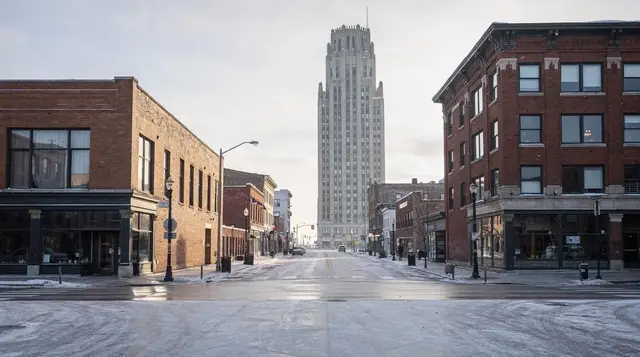
GetYourGuide does not provide a product photo for this activity — the image shows the meeting point, photographed by us.